Most falls don’t begin with a dramatic slip on ice. They begin with small things: a shoe that has stretched out, a toenail that presses, a foot that has gone a little numb, a hallway that’s dark at 2 a.m. Put a few of those together, and an ordinary walk to the bathroom becomes a risk.
That’s why fall prevention for seniors should start at ground level, with your feet and what you put on them. As a podiatrist who makes house calls around Naples, I get to see where people actually walk: the tile kitchen, the lanai, the single step down into the garage, the slippers waiting by the bed. This guide pulls together what the CDC, the National Institute on Aging and the research say about feet and falls, and turns it into practical steps you can start this week.
Fall prevention for seniors is a set of practical, evidence-based steps that lower the chance of a fall, and of getting hurt if one happens. The core pieces are strength and balance exercise, a medication and vision review, a safer home and, too often overlooked, comfortable, healthy feet in supportive, well-fitting shoes.
Key takeaways
- More than 1 in 4 adults 65 and older falls each year, and falling once doubles the chance of falling again. Many falls can be prevented.
- Foot pain, numbness from neuropathy, weak toes and calves, stiff ankles and toe deformities are all linked to a higher risk of falling.
- Safer shoes have a firm heel counter, a low and broad heel, a textured sole and laces or straps. Socks alone, backless slippers and flip-flops are riskier.
- Exercise that challenges your balance and builds leg strength has the strongest evidence for preventing falls. Start with a sturdy counter for support.
- In clinical trials, podiatry programs that combined foot and ankle exercises, orthoses and footwear advice reduced falls in older adults with foot pain.
- A room-by-room home check, plus a review of your medicines and vision, covers the other big risks.
- In Southwest Florida, take extra care on wet pool decks, glossy lanai tile and soft beach sand.
In this article· 14 sections
- 1Why fall prevention for seniors matters
- 2Foot problems and falls: how your feet keep you balanced
- 3Neuropathy and falls: when you can’t feel the floor
- 4Shoes to prevent falls: the features that matter
- 5How a podiatrist assesses fall risk
- 6Balance exercises for seniors: start with your feet
- 7Home safety checklist for falls, room by room
- 8Fall prevention in Naples and Southwest Florida
- 9Other fall risks to review with your doctor
- 10After a fall: what to do and how to rebuild confidence
- 11For caregivers and adult children
- 12When to see a podiatrist about balance and falls
- 13Common questions
- 14Sources
Why fall prevention for seniors matters
Falls are common, and they’re often kept quiet. According to the CDC (opens in a new tab), more than one in four people 65 and older fall each year, yet fewer than half tell their doctor. Falling once doubles your chances of falling again.
Most falls don’t cause a serious injury. But about one in ten leads to an injury that keeps an older adult from usual activities for at least a day or needs medical care. Falls among older adults account for roughly 4.5 million emergency department visits a year in the U.S. Falls cause nearly nine in ten emergency visits and hospital stays for hip fractures, and they are the most common cause of traumatic brain injury in older adults.
The quieter cost is confidence. After a fall, or even a close call, many people start doing less. The CDC points out that fear of falling often leads to less activity, which leads to weaker muscles, which makes another fall more likely. It’s a cycle worth breaking early.
The good news: many falls can be prevented
The CDC is clear that falls are not a normal part of aging, and that many can be prevented. The steps aren’t complicated. They’re everyday basics, done consistently: stronger legs, steadier balance, better shoes, brighter hallways and a medication review.
For doctors, the CDC’s fall-prevention program is called STEADI (opens in a new tab), short for Stopping Elderly Accidents, Deaths & Injuries. It guides clinicians to screen older patients for fall risk, assess the reasons and step in with targeted help. Feet and footwear are part of that picture, and that’s where a podiatrist can help.
Foot problems and falls: how your feet keep you balanced
Your feet do two jobs at once. They are your base of support, the foundation everything else stands on. They are also sensors. Nerve endings in your soles constantly tell your brain where your weight is and what the ground feels like.
Muscles in your toes, feet, ankles and calves then make tiny corrections to keep you upright. When any part of that system hurts, weakens or goes numb, balance gets harder. That’s especially true on uneven ground, in dim light, or when you turn quickly.
What the research shows
This isn’t just theory. In a study that followed 176 retirement-village residents (opens in a new tab) (average age 80) for a year, those who fell had stiffer ankles, more severe bunions, less feeling in the soles of their feet, weaker toes and more disabling foot pain than those who didn’t. Weak toes and disabling foot pain stood out as risk factors even after other fall risks were taken into account.
A second study of 312 people aged 60 to 90 (opens in a new tab) found that weaker toe muscles and toe deformities raised the risk of falling over the following 12 months. And a 2026 review that pooled 14 long-term studies (opens in a new tab) found that foot pain nearly doubled the odds of a future fall, with reduced sensation and weak toe muscles also linked to higher risk.
The CDC’s STEADI fact sheet on feet and footwear (opens in a new tab) lists the foot-related risk factors this way:
- More foot pain
- Less flexibility in the ankle joint
- Weaker calf muscles (the muscles that lift you onto the balls of your feet)
- Less feeling in the feet from neuropathy (nerve damage)
- A bunion (hallux valgus) or other toe deformities
Foot pain changes the way you walk
When something hurts, you protect it. You shorten your stride, shift your weight to one side of the foot, or walk more slowly and stiffly. Those changes make sense in the moment, but they can throw off your balance and make it harder to catch yourself if you trip.
The pain doesn’t have to come from anything dramatic. A thick, curved toenail pressing against the shoe, a corn on a toe knuckle, a callus under the ball of the foot, an ingrown nail, or heel pain with the first steps of the morning can all change how you walk. Most of these are very treatable. See our guides to thick toenails, corns and calluses and ingrown toenails.
Weak toes, weak calves and stiff ankles
Your toes grip the ground and help push you forward. Your calves lift your heels and help you recover when you start to tip. Your ankles need enough bend to let each foot roll through a step and clear curbs and door thresholds.
All three can lose strength and flexibility with age and inactivity. The encouraging part is that all three respond to simple exercises. You’ll find a starter routine later in this guide.
Bunions, hammertoes and changing foot shape
Feet can change size and shape over the years, and toes can drift or curl. A bunion or hammertoe makes many shoes uncomfortable. That tempts people into soft, stretched-out slippers or backless shoes, which are exactly the kinds of footwear linked to falls.
The answer is usually a shoe with a roomier, deeper toe box, not a looser shoe. The CDC specifically suggests a wide toe box to make room for bunions and hammertoes.
Neuropathy and falls: when you can’t feel the floor
Peripheral neuropathy is nerve damage that can cause numbness, tingling, burning or pain, usually starting in the feet. Diabetes is a common cause. According to the National Institute of Diabetes and Digestive and Kidney Diseases (NIDDK), up to half of people with diabetes (opens in a new tab) have peripheral neuropathy. But diabetes isn’t the only cause, so new numbness is always worth mentioning to your doctor.
When your soles can’t feel the floor clearly, your brain gets less information about where your feet are. The NIDDK warns that peripheral neuropathy can make you more likely to lose your balance and fall. The CDC’s “Stay Independent” checklist includes the statement “I have lost some feeling in my feet” for exactly this reason: numbness can lead to stumbles.
Signs your feet may not be sending clear signals
- Your feet feel numb, tingly or “asleep,” or you notice burning or pins and needles
- You don’t notice a pebble in your shoe, or a blister, until you take off your socks
- You feel less steady in the dark, or when you close your eyes to rinse your hair in the shower
- You find yourself watching your feet as you walk
Staying steady with neuropathy
- Check your feet every day. Use a mirror, or ask a family member to help. The NIDDK recommends daily foot checks so problems are caught early.
- Wear shoes and socks at all times. For people with diabetes, the NIDDK advises against walking barefoot or in just socks, even indoors.
- Light your path. When your feet can’t feel well, your eyes do more of the work. Night-lights matter.
- Slow down on tricky surfaces. Grass, gravel, sand and wet tile all ask more of your balance.
- Make balance training a habit. A physical therapist can tailor exercises to your needs.
- See a foot doctor regularly. The NIDDK suggests a foot exam at least once a year, and more often if you have foot problems.
If you live with diabetes, our guide to diabetic foot care at home covers daily checks, nail care and warning signs in more detail.
When to call a podiatrist
New numbness, tingling or burning in your feet; a cut, blister or sore you didn’t feel happen; a change in the color or temperature of a foot; or a toenail you can no longer trim safely. If you have diabetes and notice a sore that isn’t healing, call promptly. Finding and treating foot problems early lowers the chance of a serious infection.
Shoes to prevent falls: the features that matter
There is no single “right” brand. What matters is how a shoe is built and how well it fits your foot. The CDC’s STEADI footwear fact sheet and the American Podiatric Medical Association (APMA) (opens in a new tab) agree on the basics.
What makes a shoe safer
According to the CDC’s footwear fact sheet, a safer shoe has:
- A firm heel collar that holds your heel steady
- A broad, slightly flared heel that puts more of the shoe in contact with the ground
- A beveled (rounded) heel edge to help prevent slipping
- A textured sole for grip
- A thin, firm midsole so you can “feel” the ground under you
- Laces or straps so the shoe stays on your foot as you walk
The CDC also recommends sturdy shoes with low heels, good traction, and strong arch and heel support, worn both inside and outside the home.
What makes a shoe riskier
- Soft or stretched uppers that let your foot slide around inside
- Slippery or worn-down soles, which are a particular hazard in wet weather
- No laces or straps, so the foot can slide out
- Heels higher than about an inch, especially narrow ones
- Shoes with no back (mules, clogs) or a strappy back (slingbacks)
- Walking in socks alone, indoors or out
Your footwear checklist
Use this table when you sort through your closet or shop for new shoes.
| Feature | What to look for | Why it matters |
|---|---|---|
| Heel counter (back of the shoe) | Firm; it doesn’t collapse when you squeeze it | Holds your heel steady |
| Heel height | Low, about 1 inch or less | Lower heels are more stable |
| Heel shape | Broad and slightly flared, with a rounded (beveled) edge | More ground contact, less catching |
| Sole | Textured, slip-resistant rubber that isn’t worn smooth | Grip on tile, pool decks and wet sidewalks |
| Midsole | Thin and firm, not thick and squishy | Helps you feel the ground |
| Flex point | Bends where your toes bend; doesn’t twist in the middle | Stability through each step |
| Fastening | Laces, hook-and-loop straps or buckles | Keeps the shoe on your foot |
| Back of the shoe | A closed back or a secure heel strap | Backless shoes can slip off |
| Toe box | Room for your toes, bunions and hammertoes | Less pain, steadier stride |
| Fit | Both feet measured; comfortable from day one | Feet change size over time |
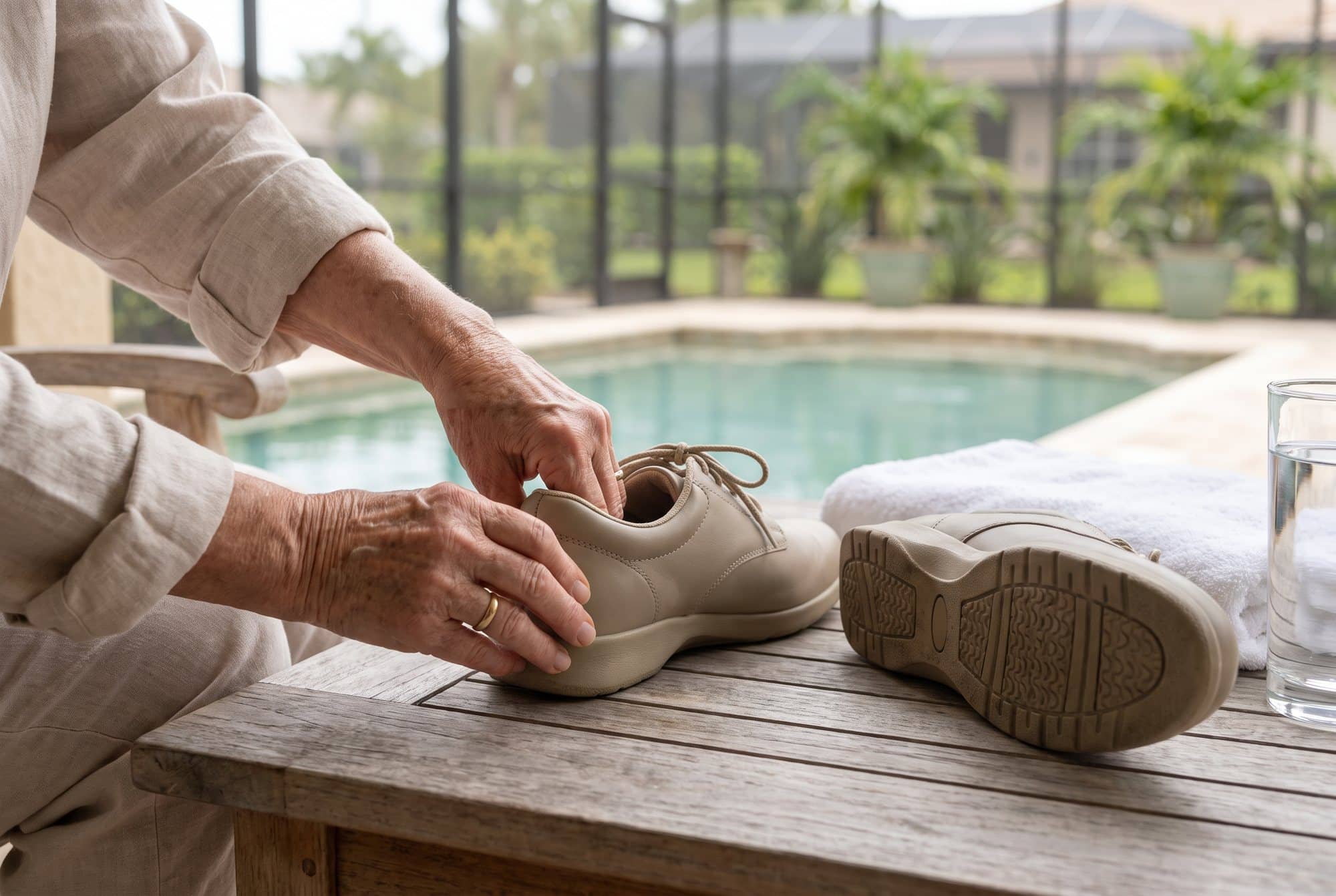
Try the APMA three-step shoe test
The APMA suggests a quick test you can do in the store or in your own closet:
- Press the heel. Squeeze both sides of the heel area. It should feel stiff and shouldn’t collapse.
- Bend the shoe. It should bend where your toes bend, but not too much. It shouldn’t be stiff as a board, either.
- Twist it. A supportive shoe shouldn’t twist in the middle.
Getting the fit right
- Have both feet measured each time you buy shoes, because feet can change size with age.
- Shop later in the day, and fit the shoes to your larger foot.
- Wear the socks you’ll actually wear with the shoes, and walk around before you buy.
- Choose shoes that feel comfortable right away. The APMA advises against shoes that need a “break-in period.”
- If you wear orthotics, bring them when you shop.
- If your feet are hard to fit, ask about a pedorthist, a specialist in fitting footwear and foot devices. The CDC suggests this option too.
Barefoot, socks and slippers at home
Many falls happen at home, and home is exactly where people tend to kick off their shoes. In a study of 1,371 older adults (opens in a new tab), going barefoot or in stocking feet was linked to a sharply higher risk of falling, while athletic and canvas sneakers carried the lowest risk. Another study (opens in a new tab) found that people who fell indoors were much more likely to go barefoot or wear socks at home. And in a Boston study (opens in a new tab), about half of falls at home happened while people were barefoot, in socks or in slippers.
The takeaway isn’t that you need sneakers from morning to night. It’s that the shoes you wear most at home deserve as much thought as your going-out shoes. Choose a closed-back house shoe with a firm, non-slip sole and an adjustable strap. Retire slippers that have stretched out or worn smooth.
What about orthotics and insoles?
Orthotics are shoe inserts, either ready-made or custom, that can redistribute pressure, ease pain and support the foot. They can be a helpful piece of the plan. In the research, though, new shoes or insoles on their own haven’t clearly reduced falls. The podiatry programs that did reduce falls combined footwear and orthoses with foot and ankle exercises and education. A podiatrist can tell you whether an insert makes sense for your feet and your shoes.
How a podiatrist assesses fall risk
Fall-prevention guidelines increasingly include the feet. The World Guidelines for Falls Prevention and Management for Older Adults (opens in a new tab), published in 2022 by an international task force, recommend checking for unsafe footwear (including going barefoot), assessing foot problems and considering referral to a podiatrist as part of a full fall-risk assessment. The CDC’s footwear fact sheet suggests asking your health care provider to check your feet once a year, and seeing a podiatrist if you have foot pain or toe or foot deformities.
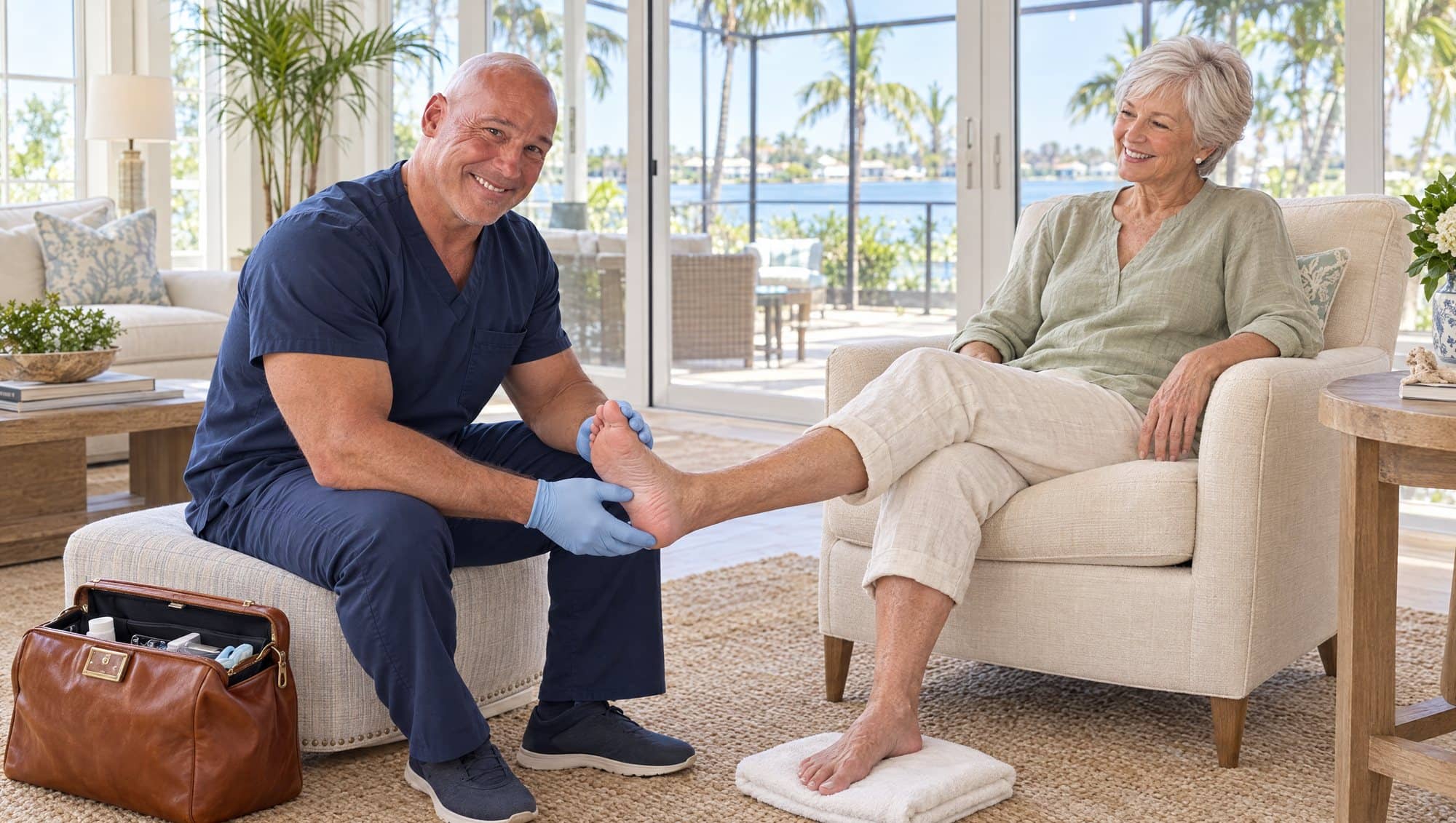
What I check during a house call
When I visit patients at home, a fall-risk foot check usually covers:
- Your story. Any falls or near-misses (when, where and what you were doing), any dizziness, and whether worry about falling has made you cut back.
- Pain. Where your feet hurt, and how that pain changes the way you stand and walk.
- Skin and nails. Thick or curved toenails, corns, calluses, ingrown nails and cracked heels. Anything that makes a step uncomfortable matters.
- Sensation. Simple touch and vibration tests to see how well your soles can feel.
- Circulation. Pulses, skin temperature and color.
- Strength and flexibility. Toe grip, calf strength (can you rise onto the balls of your feet?) and how far your ankles bend.
- Foot shape. Bunions, hammertoes and arch height.
- Walking. How you get up from a chair, walk down your hallway and turn around.
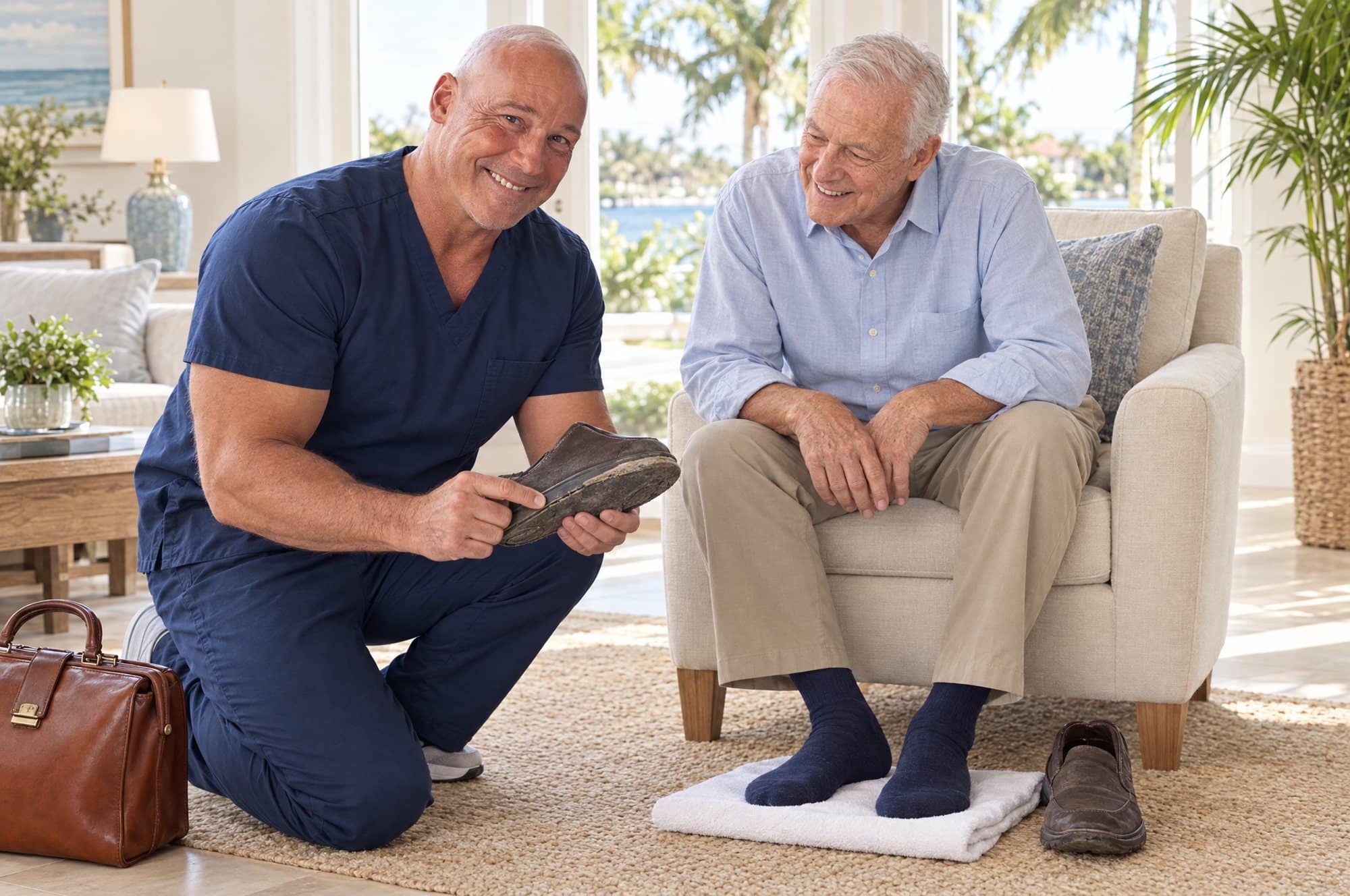
- Your shoes, all of them. The walking shoes, the slippers by the bed, the sandals by the pool door. I look at fit, the heel counter, the tread and the wear pattern on the soles.
- Your walking routes. The path from bed to bathroom at night, the step into the garage, the lanai.
Seeing your actual shoes and floors is one of the real advantages of a home visit. Advice fits better when it’s built around the way you really live. If you’re curious how a visit works from start to finish, read what to expect from a house-call podiatrist.
Simple screening tests you may hear about
The CDC’s STEADI program describes a few quick tests clinicians use to gauge fall risk:
- Timed Up and Go (TUG): Stand up from a chair, walk about 10 feet at your normal pace, turn, walk back and sit down. Taking 12 seconds or longer suggests a higher risk of falling.
- 30-Second Chair Stand: Count how many times you can stand up from a chair, arms crossed over your chest, in 30 seconds. A below-average score for your age suggests a higher risk.
- 4-Stage Balance Test: Stand with your feet side by side, then in a half-step stance, then heel-to-toe, then on one foot, for 10 seconds each. Not being able to hold the heel-to-toe stance for 10 seconds signals increased risk.
These are screening tools, not a diagnosis. They’re designed to be done with a clinician right beside you for safety, so don’t try them alone if you feel unsteady.
What a podiatry plan can include
- Treating painful nails, corns and calluses so walking feels comfortable again
- Specific footwear advice for your feet and, when helpful, inserts or orthotics
- A home program of foot and ankle exercises
- Coordinating with your primary care doctor, a physical therapist or your eye doctor when other risks turn up
- Practical changes for your home, based on what I see during the visit
Does podiatry care actually reduce falls?
The evidence is encouraging. In a randomized trial published in the BMJ (opens in a new tab), 305 older adults with disabling foot pain received either routine podiatry care or a “multifaceted” program. The program included foot orthoses, footwear advice with a voucher toward new shoes, a home foot-and-ankle exercise routine three times a week, and a falls-prevention booklet. Over 12 months, the program group had 36% fewer falls. They also improved their ankle strength, flexibility and balance compared with the routine-care group.
A larger trial in England and Ireland (opens in a new tab), with 1,010 people, found a smaller drop in the overall fall rate that wasn’t statistically significant. Still, fewer people in the program group fell at all (49.7% vs. 54.9%), and fewer fell more than once. A 2019 review (opens in a new tab) that pooled the trials concluded that multifaceted podiatry programs reduce the rate of falls in older people living at home. The evidence in care homes is still unclear.
In plain English: podiatry isn’t a stand-alone fix. But caring for your feet, your shoes and your foot strength is a sensible, evidence-backed part of a fall-prevention plan.

House calls in Naples
Rather have Dr. Losier take a look?
He comes to your home with sterile instruments and everything needed for the visit. We’ll check your benefits before your visit, so you’ll know what’s covered (and any cost) ahead of time.
Balance exercises for seniors: start with your feet
If you change only one thing, make it exercise. A Cochrane review of 108 trials (opens in a new tab) involving more than 23,000 older adults living at home found that exercise programs reduced the rate of falls by about 23%. Programs built around balance and functional exercises, like standing up from a chair and stepping in different directions, reduced falls. Programs that combined balance work with strength training probably did even better, and tai chi helped too.
The U.S. Preventive Services Task Force (opens in a new tab) recommends exercise to prevent falls in adults 65 and older who live at home and are at increased risk. The 2022 World Falls Guidelines recommend balance-challenging and functional exercises three or more times a week, made gradually harder, for at least 12 weeks, and continued for lasting benefit.
Tip
Check with your doctor before you start, especially if you’ve fallen recently, feel dizzy or lightheaded, or have heart or lung disease, osteoporosis, neuropathy, or a recent surgery or joint replacement. Hold a sturdy kitchen counter or a heavy chair that can’t slide, wear supportive shoes, and have someone nearby the first few times. Stop if you feel dizzy, short of breath, chest pain or sharp pain.
1. Heel raises at the counter
This builds the calf muscles that lift you onto the balls of your feet. Weak calves are one of the CDC’s foot-related fall risk factors.
- Stand facing the counter with your feet hip-width apart and both hands resting on the edge.
- Slowly rise up onto the balls of your feet, as high as is comfortable.
- Pause for a second, then lower slowly, taking about three seconds on the way down.
- Start with 8 to 10. Work up to 2 sets of 10 to 15.
2. Toe raises
This works the muscles in the front of your shins that lift your toes as you step.
- Stand at the counter with both hands on the edge and your weight on your heels.
- Lift the front of your feet and your toes off the floor, keeping your heels down.
- Hold for a second, then lower. Repeat 10 times.
3. Toe curls and towel scrunches
These strengthen the small toe muscles that grip the ground.
- Sit in a sturdy chair with a small towel flat on the floor under your feet.
- Curl your toes to scrunch the towel toward you, then relax and spread your toes wide.
- Repeat 10 times with each foot.
If you have diabetes or neuropathy, do this one in thin socks and check your feet for redness afterward.
4. Ankle circles and the ankle alphabet
This keeps your ankles flexible.
- Sit in a chair and lift one foot slightly off the floor.
- Slowly draw 10 circles with your toes in each direction, or trace the letters of the alphabet.
- Switch feet.
5. The chair rise
The CDC’s STEADI program recommends this exercise for the thigh and buttock muscles you use to get up from a chair or out of a car.
- Sit toward the front of a sturdy chair (with its back against a wall), knees bent, feet flat on the floor and shoulder-width apart.
- Rest your hands lightly on the seat beside you. Keep your back straight and your chest slightly forward.
- Breathe in, lean forward and feel your weight move onto the front of your feet.
- Breathe out and slowly stand up, using your hands as little as possible.
- Pause, then breathe in as you sit back down slowly. Don’t drop into the chair; control the lowering.
The CDC suggests 10 to 15 repetitions, a minute of rest, then a final set of 10 to 15. Start with fewer if that’s too many. The long-term goal is to stand up without using your hands.
6. Side leg raises
These strengthen the hip muscles that keep you steady side to side.
- Stand at the counter or behind a sturdy chair, holding on with both hands.
- Keeping your body upright and your toes facing forward, slowly lift one leg out to the side.
- Lower slowly. Do 10 on each side.
7. Heel-to-toe stand and walk
- At the counter, place one foot directly in front of the other, so the heel of the front foot touches the toes of the back foot.
- Hold for 10 seconds, then switch feet.
- When that feels easy, walk heel-to-toe along the length of the counter, keeping a hand on it.
8. Standing on one foot
- Hold the counter with both hands and lift one foot slightly off the floor.
- Hold for 10 seconds, then switch sides.
- Repeat a few times on each side. Over the weeks, work up to longer holds.
How to progress safely
- Reduce support gradually: two hands, then one hand, then fingertips. Keep the counter within reach.
- Add repetitions, or slow down the lowering, before you add anything harder.
- If you’ve already fallen, ask your doctor about physical therapy. The CDC’s STEADI materials point people with poor balance toward physical therapy or evidence-based programs such as tai chi.
- Look for community tai chi or balance classes. Many senior centers offer them.
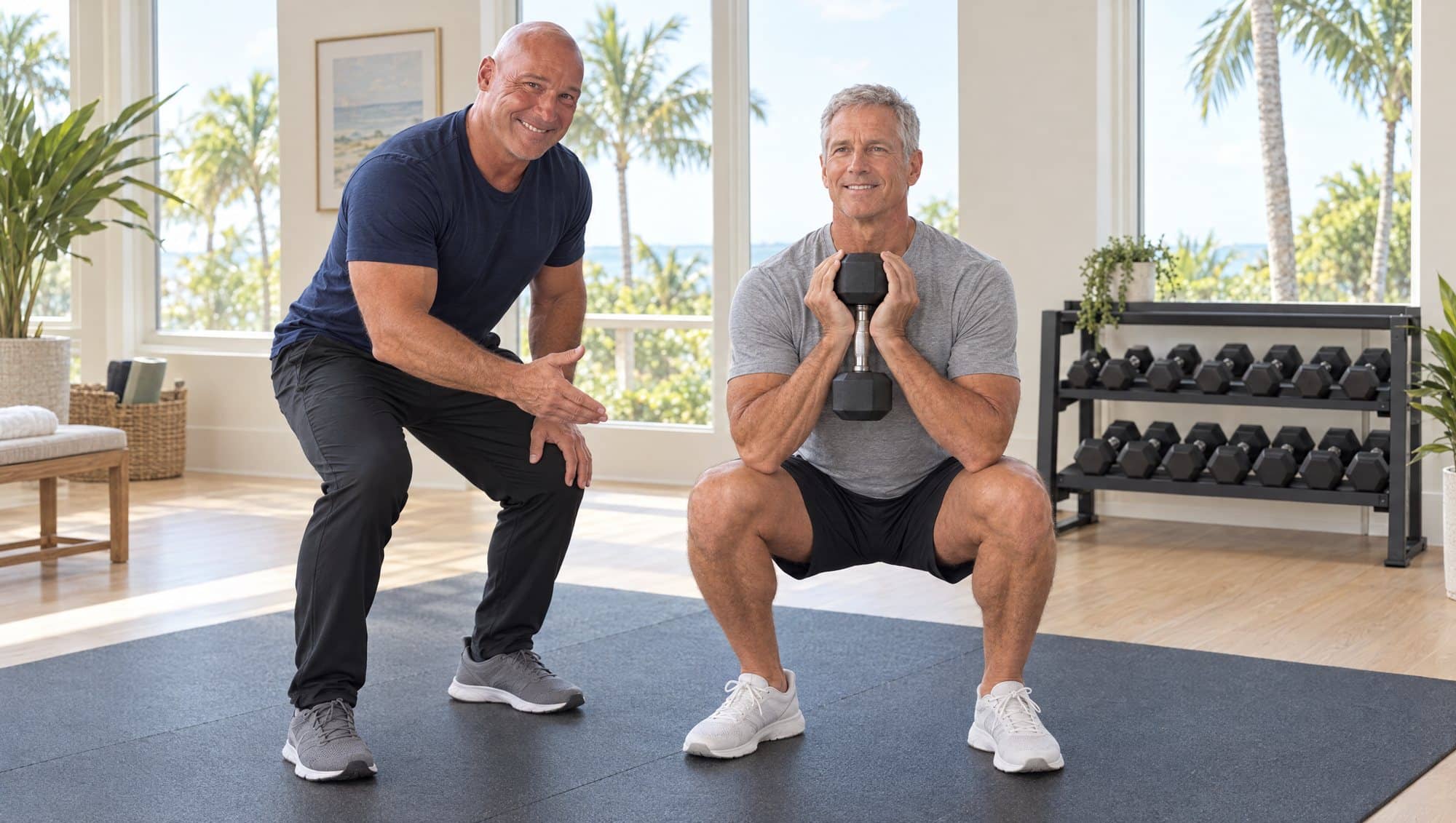
For a complete strength plan, see our guide to strength training after 60. I also offer wellness coaching on strength, balance, footwear and everyday habits. It’s education and coaching, not medical care.
Home safety checklist for falls, room by room
Many falls happen at home, where we move around without thinking about safety. The CDC’s “Check for Safety” checklist (opens in a new tab) and the National Institute on Aging’s room-by-room guide (opens in a new tab) make a good walk-through. Set aside 20 minutes, invite a family member and go room by room.
Floors and hallways
- Keep walking paths wide and clear. Move furniture so you don’t have to walk around it.
- Remove throw rugs, or secure them with double-sided tape or a non-slip backing.
- Pick up papers, shoes, books and pet toys from the floor.
- Coil or tape cords along the wall, away from walking paths.
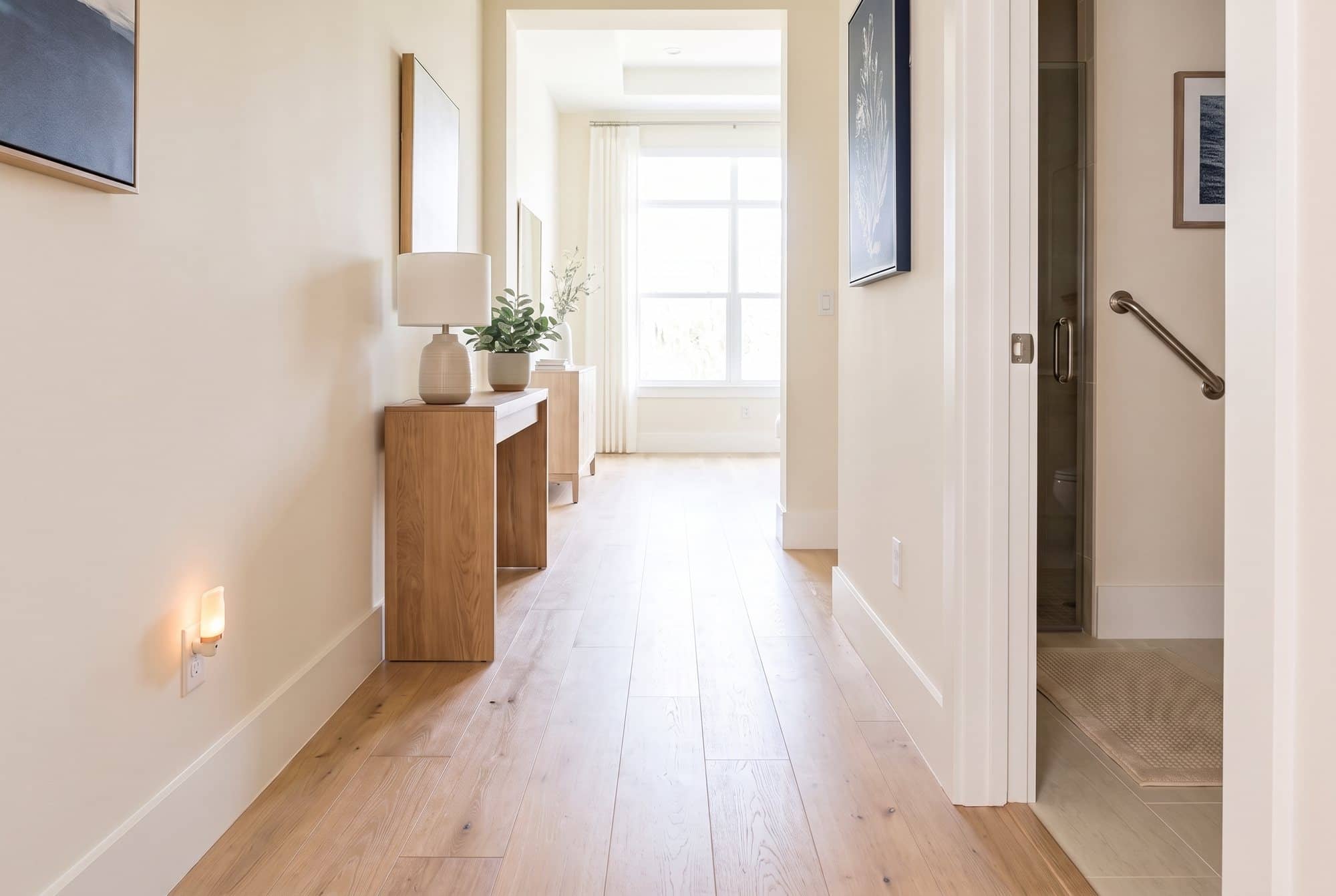
- Add night-lights along the route from bed to bathroom. Plug-in lights that switch on automatically help.
- Wipe up spills right away, and don’t walk on freshly washed floors.
Stairs and steps, inside and out
- Install handrails on both sides of the stairs, running the full length.
- Put lights and switches at both ends of the staircase.
- Fix loose or uneven steps, and add non-slip treads.
- Keep stairs clear of objects.
- Carry things in a shoulder bag or backpack so one hand stays on the rail, and never let a load block your view of the steps.
Bathroom
- Install grab bars next to the toilet and both inside and outside the tub or shower.
- Put a non-slip mat or adhesive strips on the tub or shower floor, and non-skid mats wherever the floor gets wet.
- Use a night-light, or leave a light on at night.
Bedroom
- Keep a lamp or light switch within easy reach of the bed.
- Light the path to the bathroom with a night-light.
- Keep a flashlight by the bed in case the power goes out, which is handy during storm season.
- Keep a charged phone within reach.
- Sit on the edge of the bed for a moment before you stand, especially at night.
Kitchen
- Store everyday items at about waist height.
- Never stand on a chair. If you must use a step stool, choose a steady one with a handrail, and have someone nearby. A long-handled reacher is safer for light items.
- Wipe up spills right away.
- Sit down to prepare food if you tire easily.
Lanai, garage and entryways
- Add non-slip material to outdoor steps, and repair broken or uneven ones.
- Keep walkways and the lanai clear of debris such as fallen palm fronds.
- Consider a grab bar by the front door for balance while you lock or unlock it.
- Turn on the porch light at night, and leave it on if you’ll come home after dark.
- Make a single step, like the one into the garage, easy to see, and add a rail if you can.
Plan for getting help
- Carry a charged mobile phone as you move around the house.
- Consider a medical alert pendant or bracelet, or a smartwatch that can call for help.
- Arrange a daily check-in with a family member or friend.
Good to know
If you’ve had a fall, your doctor may suggest a home visit from an occupational therapist, physical therapist or nurse to review your home. Many Area Agencies on Aging run home-modification programs. You can find yours through the Eldercare Locator at 800-677-1116.
Fall prevention in Naples and Southwest Florida
Our climate keeps people active outdoors all year, which is wonderful for balance and strength. It also brings a few hazards that most fall-prevention guides never mention.
Wet pool decks and lanai tile
Smooth tile, travertine and pavers get slippery when they’re wet from the pool, the sprinklers, sunscreen or an afternoon storm. A few habits help:
- Wear a sandal or water shoe with a back strap and a textured sole on the pool deck.
- Dry your feet before stepping from the deck onto indoor tile, and keep a non-slip mat at the lanai door.
- Use the handrail on pool steps and ladders, and take steps one at a time.
- Slow down on wet driveways and sidewalks after a summer downpour. The National Institute on Aging advises extra caution on wet surfaces.
- Watch for shaded pavers that stay damp and slick.
Flip-flops and backless sandals
Flip-flops are practically the local uniform. But they have no back, and the CDC advises avoiding shoes without one. Your toes have to work to keep them on, and they can slip off or catch on an edge. Save them for the pool chair. For walking, choose sandals with a heel strap, adjustable straps across the foot and a firm, textured sole.
Beach sand and boardwalks
Soft, dry sand shifts under every step. If you walk the beach, stick to the firmer sand near the water line, use the handrails on beach-access walkways and stairs, and consider water shoes or sport sandals with a back strap. If neuropathy has left your feet numb, protect them from hot sand and pavement, because you may not feel a burn as it happens.
Seasonal homes, condos and travel
Many people here split the year between homes, or welcome family to a condo for the season. An unfamiliar layout is a classic setup for a nighttime trip. Pack a night-light, walk the route from bed to bathroom in daylight, and ask for a rental or hotel room with bathroom grab bars.
Heat, hydration and standing up slowly
Florida heat can sap your energy. Drink water through the day, unless your doctor has told you to limit fluids. And stand up slowly after sitting in the sun or climbing out of the pool. Getting up too quickly can make your blood pressure drop and leave you wobbly.
House calls in Naples
Rather have Dr. Losier take a look?
He comes to your home with sterile instruments and everything needed for the visit. We’ll check your benefits before your visit, so you’ll know what’s covered (and any cost) ahead of time.
Other fall risks to review with your doctor
Feet are one piece of the puzzle. The CDC lists several other fall risks that can often be changed:
- Lower-body weakness
- Vitamin D deficiency
- Trouble with walking and balance
- Certain medicines, such as tranquilizers, sedatives, antidepressants and some over-the-counter drugs
- Vision problems
- Foot pain or poor footwear
- Home hazards like broken steps, throw rugs and clutter
Medicines
Ask your doctor or pharmacist to review everything you take, including prescriptions, over-the-counter medicines and supplements, and to look for anything that causes dizziness or drowsiness. The National Institute on Aging notes that the more medicines you take, the more likely you are to fall. Never stop or change a medicine on your own. Talk with the doctor who prescribed it.
Vision and hearing
Have your eyes checked every year and update your glasses as needed. The CDC notes that bifocal or progressive lenses can distort distances when you’re walking outdoors, so single-vision distance glasses may be safer for walks. If you have a hearing aid, make sure it fits well and wear it. Even small changes in sight and hearing are linked to a higher risk of falls.
Blood pressure when you stand
Some people’s blood pressure drops when they stand up, which can cause lightheadedness. This is called postural (or orthostatic) hypotension. Stand up slowly, and ask your doctor to check your blood pressure both lying down and standing.
Bone health
Strong bones won’t stop a fall, but they can lower the chance of a fracture if one happens. Ask your doctor about osteoporosis screening and about vitamin D, which the CDC lists among fall risk factors. For a food-first approach to staying well, see healthy aging without supplement stacks.
Sleep, alcohol and nighttime bathroom trips
Being tired makes falls more likely, and too much alcohol affects balance. Rushing to the bathroom, especially at night, is another common setup for a fall. A clear, lit path helps, and it’s worth talking with your doctor if urgency is a problem.
Take the CDC’s 12-question self-check
The CDC’s “Stay Independent” brochure (opens in a new tab) includes a quick yes-or-no checklist. It asks about things like:
- Have you fallen in the past year?
- Do you sometimes feel unsteady when you walk, or steady yourself on furniture at home?
- Do you need to push with your hands to stand up from a chair?
- Have you lost some feeling in your feet?
- Are you worried about falling?
If you score 4 points or more, the CDC suggests discussing the results with your doctor.
After a fall: what to do and how to rebuild confidence
Even with good habits, falls can still happen. Knowing what to do ahead of time makes it easier to stay calm.
If you fall
The National Institute on Aging suggests these steps:
- Breathe. Take a few deep breaths and stay still for a moment to get over the shock.
- Check for injury. Getting up too quickly, or the wrong way, could make an injury worse.
- If you can get up safely, roll onto your side. Rest while your body and blood pressure adjust. Then slowly get onto your hands and knees and crawl to a sturdy chair.
- Use the chair to rise. Put your hands on the seat and slide one foot forward so it’s flat on the floor, keeping the other knee down. Then slowly rise and turn to sit in the chair.
- Get help if you need it. If you’re hurt or can’t get up, ask someone for help or call 911. If you’re alone, get as comfortable as you can and wait for help.
When to get medical care right away
- You can’t get up, you’re in severe pain or you can’t put weight on a leg. Call 911.
- You hit your head and notice warning signs. A headache that gets worse, repeated vomiting, slurred speech, weakness or numbness, confusion or passing out all need emergency care.
- You take a blood thinner and hit your head. Get checked by a health care provider right away, even if you feel fine. The CDC notes that these medicines may increase the risk of bleeding in the brain after a head injury.
In the days after
- Tell your doctor, even if you weren’t hurt. A fall can point to a new medical problem, a medication issue or a vision change that can be corrected.
- Think through what happened. Where were you? What was on your feet? Were you dizzy, rushing or carrying something? The answers help your doctor find the cause.
- Have your feet and shoes checked. Pain, numbness or a worn-out sole may be part of the story.
- Keep moving. Ask about physical therapy, so one fall doesn’t lead to less activity and more falls.
Fear of falling: getting your confidence back
Worrying about falling is understandable, and it’s common even among people who have never fallen. But the CDC’s self-check notes that people who are worried about falling are more likely to fall, and fear often leads to doing less. The National Institute on Aging puts it simply: don’t let a fear of falling keep you from being active.
What helps:
- Practice with support. Confidence follows practice. Start with counter-supported exercises and build from there.
- Join a class. Tai chi and balance classes build steadiness and confidence in a friendly group.
- Get the right help. The World Falls Guidelines recommend exercise, cognitive behavioral therapy and occupational therapy to ease fear of falling. A physical therapist can also teach you how to get up from the floor safely.
- Have a plan. A charged phone, a medical alert device and a daily check-in make it easier to stay active.
- Choose your routes. Start on even, well-lit paths, like a smooth community sidewalk or an indoor mall, and add variety as you get steadier.
For caregivers and adult children
If you’re reading this for a parent, you’re already doing the most important thing: paying attention. The CDC’s brochure for family caregivers (opens in a new tab) boils it down to four steps:
- Speak up. Tell your loved one’s health care provider right away if they’ve fallen, seem unsteady or are worried about falling. Keep an updated list of all their medicines, including over-the-counter drugs and supplements.
- Keep moving. Activities that improve balance and leg strength, like tai chi, can help prevent falls. Check with their provider about what’s right for them.
- Have eyes and feet checked. Schedule an eye exam at least once a year, ask their provider to check their feet once a year, and talk about proper footwear and whether a foot specialist is advised.
- Make the home safe. Clear the floors, remove or secure small rugs, and add grab bars, handrails and plenty of light.
Quiet signs worth noticing
- Holding on to furniture or walls when walking around the house
- Pushing up with their hands to stand from a chair
- Trouble stepping up onto a curb
- Shuffling, or watching their feet while walking
- New reluctance to go out, shop or see friends
- Bruises or scrapes they can’t quite explain
- Stretched-out slippers, shoes with worn-smooth soles, or toenails they can no longer trim
Caregiver note
Many older adults keep falls to themselves because they worry about losing their independence. Try framing changes as ways to stay independent, not as restrictions. “Let’s get you shoes that grip, so you can keep walking with your friends” lands better than “You need to be more careful.”
If your parent lives in assisted living or a nursing home
Ask the community about its fall-prevention program and how often residents’ feet are checked. Research on podiatry programs in care homes is still limited, but comfortable nails, healthy skin and safe footwear are basics of good care. Learn more about podiatry services for nursing homes and assisted living, or share our facilities page with the director of nursing.
Making the visit easy
Getting a parent to a doctor’s office can be its own fall risk. I see patients at home in Naples and nearby communities, and family members are welcome to book the visit and join it. I work with Medicare, Medicaid, Aetna, Cigna, Humana and UnitedHealthcare. Coverage depends on the plan and the reason for the visit, so we check benefits before your visit. See how house calls work, our insurance details and does Medicare cover podiatry?
When to see a podiatrist about balance and falls
Consider a podiatry visit if:
- You’ve fallen, or nearly fallen, in the past year
- Foot pain changes the way you walk
- You have numbness, tingling or burning in your feet
- Your toenails are thick, curved or ingrown, or you can no longer trim them safely
- Corns or calluses hurt when you walk
- Bunions or hammertoes make it hard to find shoes that fit
- You have diabetes (the NIDDK recommends a foot exam at least once a year)
- You’re not sure whether your shoes are helping or hurting
Call promptly about a sore that won’t heal, new redness, warmth or swelling, or a change in the color of your foot.
The bottom line
Fall prevention for seniors isn’t about living carefully. It’s about staying active with a few smart habits: stronger legs, steadier balance, comfortable feet, supportive shoes and a home that works with you instead of against you.
Start small this week. Check the shoes and slippers you wear most. Add a night-light. Do your heel raises at the counter while the coffee brews. Then get help with the rest.
If you live in Naples or elsewhere in Southwest Florida and want a podiatrist to look at your feet, your shoes and your walking paths at home, request a house call. I’ve been practicing since 2002 and I’m a Florida-licensed podiatric physician (license PO4659). You can read more about me here.
Build your fall-prevention plan with your own doctor, who knows your health, your medicines and your history.
Common questions
Regular exercise that challenges your balance and builds leg strength has the strongest evidence. A large Cochrane review found that exercise programs reduced the rate of falls by about 23%. Pair it with a medication review, a yearly eye exam, a safer home and supportive shoes.
Look for a firm heel counter, a low, broad heel (about an inch or less), a thin and firm midsole, a textured non-slip sole and laces or straps. The CDC advises avoiding backless shoes, high heels, smooth soles and walking in socks alone. Fit matters as much as features, so have both feet measured.
Only if they work like a shoe: a closed back, a firm non-slip sole and a secure strap. Studies link going barefoot, wearing socks alone or wearing slippers at home with more indoor falls. Replace slippers that have stretched out or worn smooth.
They can raise the risk. Research links foot pain, reduced feeling in the feet, weak toe muscles, stiff ankles and bunions or toe deformities with more falls in older adults. The CDC lists foot pain and poor footwear among the fall risks you can change.
Neuropathy dulls the nerves in your feet, so your brain gets less information about where your feet are and what the ground is like. The NIDDK notes that this makes losing your balance and falling more likely. Daily foot checks, shoes at all times, good lighting and balance training all help.
Yes, as part of a broader plan. In a BMJ trial, a podiatry program of foot and ankle exercises, orthoses, footwear advice and education led to 36% fewer falls in older adults with disabling foot pain. A podiatrist can treat painful nail and skin problems, check sensation, review your shoes and teach foot exercises.
Stay still, breathe and check whether you’re hurt before you move. If you can get up safely, roll onto your side, get onto your hands and knees and use a sturdy chair to rise. If you’re hurt or can’t get up, call 911, and tell your doctor about any fall, even one without an injury.
Yes. Dr. Losier makes house calls in Naples and nearby Southwest Florida communities, and he looks at your feet, your shoes and the paths you walk at home. He works with Medicare, Medicaid, Aetna, Cigna, Humana and UnitedHealthcare. Coverage depends on your plan, and we check your benefits before your visit.
Don’t see your question? Call (914) 844-8024 — a real person will help.
Sources
The health, safety and coverage facts in this article are based on these sources.
- CDC — Facts About Older Adult Fallscdc.gov(opens in a new tab)
- CDC STEADI — Feet and Footwear for Older Adults (fact sheet)cdc.gov(opens in a new tab)
- CDC STEADI — Check for Safety: A Home Fall Prevention Checklist for Older Adultscdc.gov(opens in a new tab)
- National Institute on Aging — Falls and Fractures in Older Adults: Causes and Preventionnia.nih.gov(opens in a new tab)
- National Institute on Aging — Preventing Falls at Home: Room by Roomnia.nih.gov(opens in a new tab)
- American Podiatric Medical Association — Balance-Boosting Footwear Tips for Older Peopleapma.org(opens in a new tab)
- NIDDK — Peripheral Neuropathyniddk.nih.gov(opens in a new tab)
- Spink MJ et al. Effectiveness of a multifaceted podiatry intervention to prevent falls in community dwelling older people with disabling foot pain: randomised controlled trial. BMJ, 2011pmc.ncbi.nlm.nih.gov(opens in a new tab)
- Wylie G et al. Podiatry interventions to prevent falls in older people: a systematic review and meta-analysis. Age and Ageing, 2019academic.oup.com(opens in a new tab)
- Sherrington C et al. Exercise for preventing falls in older people living in the community. Cochrane Database of Systematic Reviews, 2019pmc.ncbi.nlm.nih.gov(opens in a new tab)
About the author
Robert Losier, DPM
Doctor of Podiatric Medicine · Practicing since 2002
Dr. Robert Losier is a Florida-licensed podiatric physician who brings unhurried foot care to patients’ homes across Naples and Southwest Florida, and on-site podiatry to care communities. A graduate of the New York College of Podiatric Medicine, he lives what he teaches — daily movement, strength training and real food — and shares practical healthy-living guidance as part of foot care.
This article is general information, not medical advice. It isn’t a substitute for an exam or for advice from your own doctor or podiatrist about your situation. Please don’t start, stop or change any medication or treatment without talking to the clinician who prescribed it. If you notice a new wound, signs of infection, or a sudden change in the color, temperature or feeling of your foot — especially if you have diabetes — contact your doctor promptly. In an emergency, call 911.