
If your toenails have turned thick, yellowed or so hard that ordinary clippers barely make a dent, you’re not alone. Thick toenails are very common in older adults, and they’re more than a cosmetic nuisance. They can make shoes painful, walking harder and nail trimming risky.
The good news is that thick nails are usually very manageable. I’ve been practicing podiatry since 2002, and caring for thick, hard-to-cut nails is one of the services I provide on house calls around Naples. This guide explains why nails thicken, how to tell fungus from other causes, how to trim safely at home, and when it’s time to let a podiatrist take over.
Thick toenails are nails that have become abnormally thick, hard and often discolored. In older adults, common causes include fungal infection (onychomycosis), repeated pressure or injury, slower nail growth and reduced circulation. A podiatrist can safely trim and thin thick nails, check for fungus and other causes, and recommend treatment that fits your health.
Whether you’re dealing with your own nails or helping a parent with theirs, you’ll find practical steps here, along with the warning signs that mean a nail needs professional attention.
Key takeaways
- Thick toenails are very common with age. Fungus is a frequent cause, but pressure from shoes, injury, circulation changes and skin conditions can thicken nails too.
- About half of nails that look fungal turn out to be something else, so it’s worth confirming the cause before starting months of treatment.
- If you trim at home, do it after a warm shower, with a sturdy straight-jawed nipper, taking small cuts straight across and filing the edges smooth.
- If you have diabetes, poor circulation or numbness, or you can’t see or reach your feet well, let a podiatrist do the trimming.
- A podiatrist can trim and thin (debride) thick nails with sterile instruments, which relieves pressure and makes shoes more comfortable.
- Fungal nail medicines take many months, and a clear new toenail can take a year or longer to grow in, so set realistic expectations.
- Medicare usually doesn’t pay for routine nail trimming, but it may cover care for painful fungal nails or for people with certain medical conditions.
In this article· 14 sections
- 1What causes thick toenails?
- 2Toenail fungus vs. thick toenails: how to tell the difference
- 3Why thick toenails matter more than you might think
- 4When thick toenails become dangerous
- 5How to cut thick toenails safely at home
- 6Should you see a podiatrist for thick toenails?
- 7What a podiatrist does for thick toenails
- 8Fungal nail treatments: an overview
- 9Common myths about thick toenails
- 10Preventing thick toenails and keeping fungus away
- 11Caring for a parent’s thick toenails
- 12Does Medicare cover thick toenail care?
- 13Common questions
- 14Sources
What causes thick toenails?
Toenails are made of keratin, the same tough protein found in hair. A healthy toenail is thin, smooth and slightly translucent. When it thickens, there’s usually more than one reason, and the changes tend to build slowly over years.
Nails grow more slowly with age
Toenails are slow growers to begin with. A review of nail changes in older adults puts their growth at about one millimeter a month, roughly a third the speed of fingernails. Growth also slows with age, by about half a percent a year through adulthood.
Slow growth matters for two reasons. Damage to a nail takes a long time to grow out, and any treatment for a nail problem takes months to show results.
Pressure, shoes and small injuries
Your toenails take a lot of wear. Shoes that are short or narrow in the toe box press on them with every step. Stubbing a toe, dropping something on your foot, or the repeated jamming that comes with tennis, pickleball or long walks can all injure the nail.
When the nail root, called the matrix, is injured, the nail it produces can grow back thicker and misshapen. Bunions and hammertoes add to the problem by pushing toes against the shoe. A review of nail disorders in older adults lists injury, faulty foot mechanics, poor circulation and infection among the causes of thickened nails, and toe deformities among the causes of ram’s horn nails.
Toenail fungus (onychomycosis)
Fungal infection of the nail, called onychomycosis, is one of the most common causes of thick toenails. The fungi live on keratin and spread slowly through the nail.
Infected nails tend to become thick, discolored (white, yellow or brown), brittle or crumbly, sometimes with chalky debris underneath. The nail may lift away from the skin beneath it, and there can be an unpleasant odor.
Toenail fungus becomes much more common with age. Cleveland Clinic estimates it affects about 10% of people overall, about 20% of people over 60, and as many as half of people over 70.
Risk factors include:
- Age over 60
- Diabetes
- Poor circulation
- Psoriasis
- A weakened immune system
- Smoking
- Repeated injury to the nail
- Athlete’s foot, which can spread from the skin to the nails
Is it just part of getting older?
Partly. Nails do grow more slowly with age, and the years add up: more time in shoes, more small bumps and more chances for fungus to take hold. But “it’s just age” shouldn’t be the end of the conversation.
A thick nail that hurts, smells, changes color or keeps getting worse usually has a cause that can be identified, and there are usually practical ways to make it more comfortable.
Circulation, diabetes and skin conditions
Reduced blood flow to the feet, often from hardening of the arteries, is linked to thickened nails. Diabetes raises the risk of fungal nails. Skin conditions such as psoriasis can also thicken nails, and they can look a lot like fungus.
Toenail fungus vs. thick toenails: how to tell the difference
Many people assume any thick, yellow nail is fungus. Often it is, but not always, and the difference matters: antifungal medicine won’t help a nail that isn’t infected.
Good to know
The American Academy of Dermatology notes that about half of nails that look fungal turn out not to have a fungal infection. A review in American Family Physician likewise reports that fungus causes about half of all abnormal nails. That’s why a quick lab test of a nail sample is worth doing before months of treatment.
Common causes of thick toenails, compared
| Condition | What it looks like | Common causes | What usually helps |
|---|---|---|---|
| Toenail fungus (onychomycosis) | Thick, yellow, white or brown; crumbly; debris under the nail; may lift or smell | A fungal infection, often spreading from athlete’s foot | Confirm with a lab test; regular trimming and thinning; prescription medicine if appropriate |
| Onychauxis (thickened nail) | Thick, hard and discolored, without a long curl | Injury, shoe pressure, foot mechanics, reduced circulation | Regular trimming and thinning |
| Onychogryphosis (“ram’s horn” nail) | Very thick, long nail that curves or hooks, usually on the big toe | Going long periods without trimming, injury, toe deformities, poor circulation | Regular trimming and thinning; sometimes permanent nail removal |
| Injury to the nail | One nail that grows thick or misshapen after a stub or a dropped object | Trauma to the nail or nail root | Trimming as needed; roomier shoes while it grows |
| Nail psoriasis | Thickening or lifting that can look like fungus, often with psoriasis on the skin | Psoriasis, an immune skin condition | Diagnosis and treatment of the psoriasis |
Onychauxis and onychogryphosis, in plain English
These two long words describe nails that have thickened for reasons other than (or in addition to) fungus.
Onychauxis is simply a thickened nail. The nail plate builds up, becomes hard and discolored, and often has thick debris underneath. It’s seen most often in older adults and is often linked to years of pressure or an old injury.
Onychogryphosis is a more advanced form, often called a “ram’s horn” nail. The nail becomes very thick and long, curves to one side and can look like a claw. It mostly affects the big toe. Doctors see it most often in older adults, especially when nails have gone untrimmed for long stretches, after injury, or with poor circulation.
Both are usually managed with regular professional trimming and thinning. Neither one is caused by poor hygiene alone; often the person simply hasn’t been able to reach or cut their nails for a while.
How the cause is confirmed
When I examine thick toenails, I look at all ten nails, the skin between the toes (where athlete’s foot hides), and the shoes you wear most.
If fungus is a possibility, a small clipping or scraping of the nail can be sent to a lab. Tests can show fungal elements under a microscope or identify the organism. The family physician review advises confirming the diagnosis before starting treatment, because oral antifungal medicines take months and have side effects.
A nail change that needs a different kind of check
Not every dark or discolored nail is fungus or bruising. The American Academy of Dermatology advises getting any new dark band on a nail examined, especially a brown or black streak on the big toe or thumb.
Darkening of the skin next to the nail, a nail that splits down the middle, or a bump under the nail also deserve a prompt look from a dermatologist. Not every dark streak is melanoma, but nail melanoma is easier to treat when it’s caught early.
Why thick toenails matter more than you might think
Thick nails can seem like a purely cosmetic issue, but for older adults they often affect comfort, walking and safety.
Pain and pressure in your shoes
A thick nail takes up room in the toe of your shoe. Every step presses it down onto the sensitive skin beneath. Over time that pressure can cause pain, bruising under the nail and, especially with diabetes or poor circulation, even a sore.
Medicare’s own rules recognize this. They describe thickened fungal nails that cause pain, infection or “marked limitation of ambulation,” meaning real trouble walking.
Curling and ingrown edges
As nails thicken, they often curve more at the sides. A curved, thick edge can press into the skin along the nail and become ingrown, which is painful and can become infected. Our guide to ingrown toenail treatment explains what helps.
Walking, balance and staying active
When toes hurt, people naturally change how they walk. They take shorter steps, shift their weight, or trade supportive shoes for loose slippers that don’t press on the nail.
Those small changes add up. Comfortable feet make it easier to stay active and steady, and our article on feet, balance and fall prevention covers more ways to protect your footing.
Infection risk
Fungal nails and athlete’s foot often travel together, and the American Academy of Dermatology notes that athlete’s foot can spread to the toenails. Cleveland Clinic adds that fungal nails can contribute to cellulitis, a bacterial skin infection, and to foot ulcers in people with diabetes.

When thick toenails become dangerous
For most people, thick toenails are a nuisance that’s easy to manage. For some, they’re a genuine health risk that calls for professional care.
If you have diabetes, poor circulation or numbness
Diabetes can reduce feeling in the feet and slow healing. If you can’t feel a thick nail pressing into your toe, or you nick the skin while trimming, a small wound can turn into a serious problem.
That’s why NIDDK, part of the National Institutes of Health, advises people with diabetes to have a foot doctor trim their nails if the nails are thick or yellowed, or if they can’t see or reach their feet.
Medicare’s foot care rules make the same point from a different angle. They note that for people with conditions such as diabetes or peripheral artery disease, foot care like cutting or thinning nails “may pose a hazard” when done by someone who isn’t a professional. If you have diabetes, our diabetic foot care guide covers the full daily routine.
If a nail is pressing into the skin
A nail that curls into the skin at the sides, or presses down hard on the nail bed, can cause a sore that’s hidden under the nail. Watch for pain at the tip of the toe, dark spots under the nail, or blood or drainage on your socks.
Signs of infection
Redness, warmth, swelling, pus or a bad smell around a nail are signs of infection. They need attention quickly, especially if you have diabetes or poor circulation.
When to call a podiatrist
Call promptly if a thick nail is causing pain, curling into the skin, or has redness, swelling, warmth, drainage or a bad smell around it. If you have diabetes or poor circulation, call about any break in the skin near a nail rather than waiting. Seek emergency care for spreading redness along with fever or chills.
How to cut thick toenails safely at home
Before you pick up the clippers, decide whether home trimming is safe for you. For many older adults, it’s a job to share with, or hand over to, a podiatrist.
First: is home trimming right for you?
Trimming your own nails is usually reasonable if:
- Your nails are only mildly thick and cut cleanly
- You can see and reach your feet comfortably
- You have good feeling in your toes and no circulation problems
- You don’t have diabetes-related foot problems
Let a podiatrist do it if you have diabetes, poor circulation or numbness, if your nails are very thick or curled, if you’ve had ingrown nails or foot sores before, or if trimming has ever made a toe bleed.
Gather the right tools
- A sturdy toenail nipper with straight cutting jaws, or a large toenail clipper with a straight edge. Fingernail clippers and scissors aren’t strong enough for thick nails.
- An emery board or nail file to smooth the edges.
- Good light you can aim, plus your reading glasses or a magnifier.
- A towel to rest your foot on and catch the clippings.
- Rubbing alcohol to clean your tools before and after.
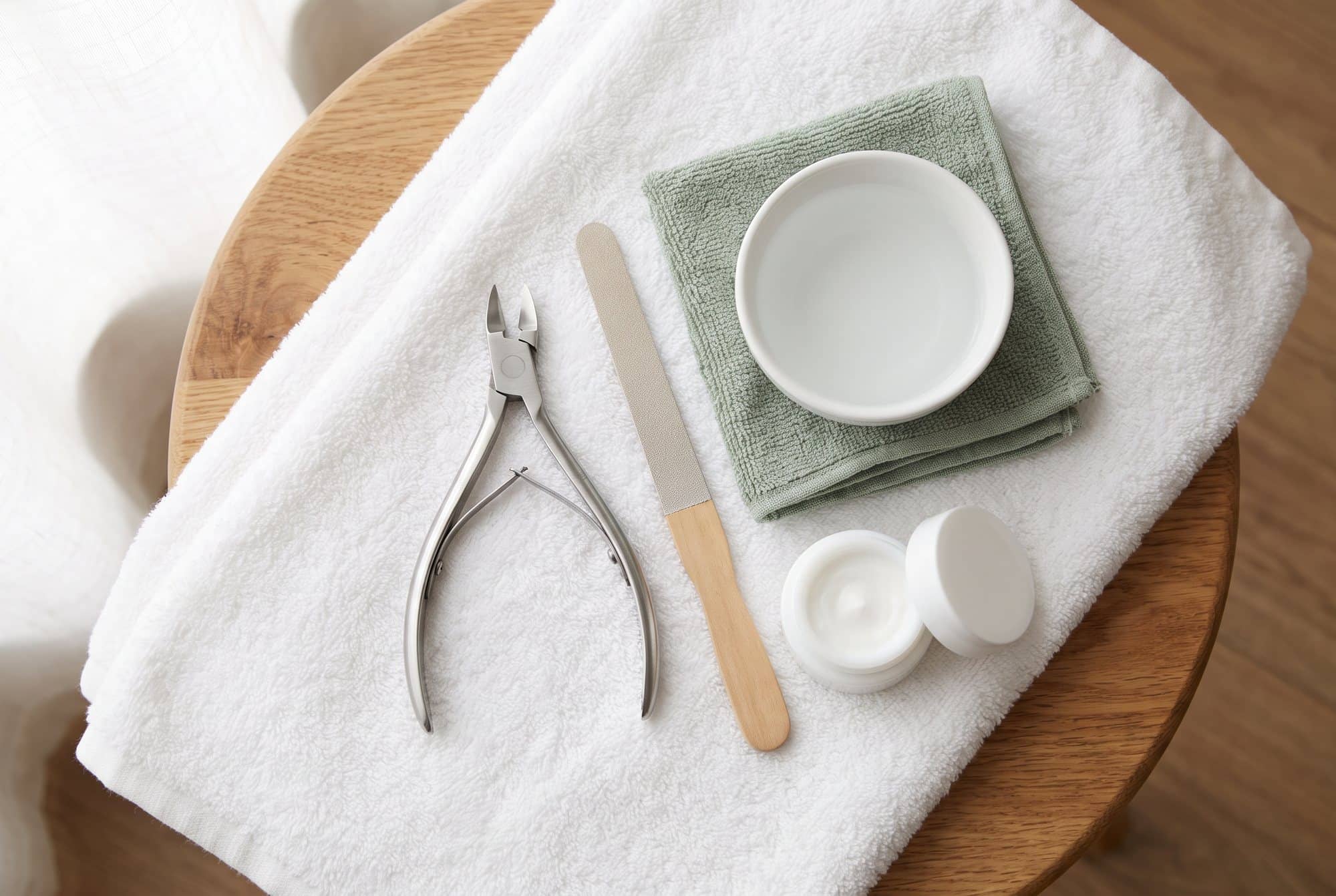
Choosing a toenail nipper
The tool matters more than most people think. For thick nails, I use nippers rather than clippers, because the long handles give you leverage and control with less squeezing.
- Look for straight cutting jaws, not the tiny curved jaws of a cuticle nipper.
- Choose a spring that opens the jaws for you, so your hand only has to close them.
- Pick handles long enough to grip comfortably. Padded handles can help if arthritis makes squeezing hard.
- Stainless steel is easy to clean with rubbing alcohol.
- Keep it for your own use, and replace it if the jaws become dull or no longer meet cleanly.
If it still takes real force to cut through a nail, that nail is ready for professional thinning.
If bending down is hard
Reaching your toes gets harder with stiff hips, back pain, arthritis or a sore knee. Please don’t balance on one leg or twist awkwardly to reach; it’s an easy way to lose your balance.
Sit down and bring your foot up onto a stool. If you still can’t see the nail clearly, it’s time for help. Long-handled toenail tools are sold online, but they make it harder to see and control each cut, so for thick nails a podiatrist visit is usually the safer choice.
Step by step
- Soften the nails first. Trim right after a warm shower or bath, when nails are softer and easier to cut. If you don’t have diabetes, a few minutes with your feet in warm water works too. If you do have diabetes, skip the soak; NIDDK advises against soaking your feet.
- Dry your feet well, including between the toes.
- Get comfortable. Sit in a sturdy chair and rest your foot on a towel-covered stool, with good light on your toes.
- Take small bites. Start at one side and make several small cuts straight across the nail, rather than trying to cut the full thickness in one squeeze. Thick nails can crack or split if you force them.
- Cut straight across and leave a little length. Don’t round the corners or dig down into the sides of the nail; that invites ingrown edges.
- Smooth the edges with a file. Light filing across the top of the nail can make it a little less bulky, but stop if it starts to feel warm or uncomfortable, and leave real thinning to a podiatrist.
- Clean your tools with rubbing alcohol. The American Academy of Dermatology recommends disinfecting nail clippers after each use and never sharing them.
- Moisturize your feet if your skin is dry, but keep lotion out of the spaces between your toes.
What not to do
- Don’t use a razor blade, kitchen scissors or household power tools on your nails.
- Don’t pry up, tear off or dig under a thick or loose nail.
- Don’t cut into the skin at the sides of the nail.
- Don’t keep going if it hurts or bleeds. Stop, clean the area, cover it, and call your podiatrist.
Should you see a podiatrist for thick toenails?
If trimming your nails has become a struggle, the answer is usually yes. You don’t need to wait for pain or infection. Consider a visit if any of these apply:
- A nail is too thick to cut with regular clippers
- Trimming hurts, or the nail crumbles or splits instead of cutting cleanly
- You have diabetes, poor circulation or numbness in your feet
- A nail is curling, growing upward or pressing into the skin
- There’s pain, redness, swelling, drainage or odor around a nail
- Your shoes press painfully on a nail, or you’ve changed how you walk
- You notice dark spots or blood under a nail, or a new dark streak
- You can’t see or reach your feet comfortably anymore
- You’d like a clear diagnosis before trying fungal treatment
A podiatrist is a doctor who focuses on the feet and ankles. Trimming and thinning thick nails is routine work for podiatrists, and it’s usually safer than wrestling with them at home.
What a podiatrist does for thick toenails
A visit for thick toenails is calm and practical. Here’s what it typically includes.
A careful exam
I start by looking at all of your nails and the skin around them, between the toes and on the soles. I’m checking for fungus, ingrown or curling edges, pressure spots, signs of infection and anything unusual under the nails.
If you have diabetes or circulation concerns, I’ll also check the feeling in your feet and the pulses in your ankles. And I’ll look at the shoes you wear most, because pressure from footwear is often part of the story.
Nail debridement: trimming and thinning
Debridement is the medical term for trimming a nail and reducing its thickness. Using sterile nippers, I trim the nail back to a healthy length, straight across. Then a small rotary file, called a burr, gently thins the thickened nail plate.
The goal is a nail that no longer presses on the toe or rubs inside your shoe. Because nails keep growing, many people need this repeated every few months.
Thinning also has a second benefit. The family physician review notes that combining debridement with antifungal medicine improves results, because medicine can reach the infection more easily through a thinner nail.
Ingrown or painful edges
If a nail edge is digging into the skin, it can often be trimmed away carefully during the same visit. Infected or recurring ingrown nails may need a minor procedure, which we’d talk through first.
When a nail keeps causing problems
For a nail that is severely thickened or curled and keeps causing pain despite regular care, there are longer-term options. Part or all of the nail can be removed, sometimes with a treatment that stops the nail root from regrowing that section. Medical reviews describe this approach for ram’s horn nails and stubborn thickened nails.
Getting ready for your visit
A little preparation helps the visit go smoothly:
- Have your list of medicines and health conditions handy, along with your insurance cards and your primary doctor’s name.
- Set out the shoes and slippers you wear most often.
- Note which nails hurt, and when they hurt.
- If you’ve tried any nail treatments, keep the names nearby.
- Invite a family member to join, especially if they help with your foot care.
At home, all I need is a comfortable chair, good light and a spot to rest your foot.
A plan you can follow at home
Before I leave, you’ll have a simple plan: how to care for your nails between visits, what to watch for, shoe advice if pressure is part of the problem, and when to schedule the next visit.

House calls in Naples
Rather have Dr. Losier take a look?
He comes to your home with sterile instruments and everything needed for the visit. We’ll check your benefits before your visit, so you’ll know what’s covered (and any cost) ahead of time.
Fungal nail treatments: an overview
If a lab test confirms fungus, treatment may help clear it. Here’s an overview so you can have an informed conversation with your doctor or podiatrist. The right choice depends on your overall health, your other medicines and how much of the nail is involved.
Prescription topical treatments
Prescription nail solutions such as efinaconazole, tavaborole and ciclopirox are applied to the nail daily for about 48 weeks. The American Academy of Dermatology notes they’re used for mild to moderate infections.
Topical treatments have fewer drug interactions than pills, which makes them appealing for older adults who take several medicines. The trade-off is effectiveness: in clinical studies, even the strongest topical treatment fully cleared the nail in fewer than one in five people.
Oral antifungal medicine
Pills such as terbinafine or itraconazole work from the inside out and are generally more effective than topical treatments. Terbinafine is usually taken for about 12 weeks for toenails.
Terbinafine and itraconazole require a blood test of liver function before starting, according to the American Academy of Dermatology. Your doctor will also review all of your current medicines for interactions, which is especially important if you take several prescriptions.
Thinning the nail
Regular debridement isn’t only for comfort. Thinning a thick nail relieves pressure, and when it’s combined with medicine, it can help the treatment work better.
Lasers, over-the-counter products and home remedies
Some offices offer laser treatment. According to the American Academy of Dermatology, lasers are approved to improve how a nail looks after the infection has cleared, not to treat the infection itself.
Over-the-counter products and home remedies such as tea tree oil don’t have good evidence behind them for clearing nail fungus. If you’ve been trying one for months without change, it’s time for a proper diagnosis.
Questions to ask before starting treatment
- Has the fungus been confirmed with a lab test?
- Which treatment fits my health and the other medicines I take?
- What side effects should I watch for, and will I need blood tests?
- How long will treatment last, and how will we know it’s working?
- What can I do to keep the fungus from coming back?
Treatment options at a glance
| Option | How it’s used | Things to know |
|---|---|---|
| Prescription topical (efinaconazole, tavaborole, ciclopirox) | Applied to the nail daily for about 48 weeks | Fewer drug interactions than pills; for mild to moderate infections |
| Oral terbinafine | A daily pill, usually for about 12 weeks for toenails | More effective; needs a liver blood test and a medication review |
| Oral itraconazole | Pills, as prescribed | An alternative; also needs a liver test and a medication review |
| Nail debridement | Trimming and thinning by a podiatrist, repeated every few months | Relieves pressure; helps medicine reach the infection |
| Laser | Light treatment in an office | Approved to improve the nail’s appearance, not to treat the infection |
| Over-the-counter and home remedies | Applied to the nail | Not enough evidence that they clear nail fungus |
Realistic expectations
Even when treatment works, the damaged nail has to grow out. The American Academy of Dermatology says a toenail can take a year or longer to grow out completely, so patience is part of the plan.
Fungus also likes to come back. The family physician review reports that 20% to 25% of people see it return within two years, and treatment tends to be less successful in people over 70 and those with diabetes. The AAD notes that adults over 60 and people with diabetes may benefit from ongoing preventive treatment after the infection clears.
For some people, especially those who take many medicines, keeping nails comfortably trimmed and thinned without antifungal medicine is a reasonable choice. That’s a decision to make with your doctor, and either way, regular nail care helps keep your feet comfortable.
Common myths about thick toenails
Thick nails come with a lot of folklore. Here are a few beliefs worth setting straight:
| Myth | Fact |
|---|---|
| “Thick toenails are always fungus.” | About half of abnormal-looking nails aren’t fungal. Injury, pressure and psoriasis are common causes too. |
| “The right drugstore cream will clear it up.” | There isn’t good evidence that over-the-counter products or home remedies clear nail fungus. Prescription treatment takes months, and the nail takes a year or longer to grow out. |
| “Thick nails just come with age, so nothing can be done.” | Regular trimming and thinning can make thick nails comfortable again, and many causes can be treated. |
| “If it doesn’t hurt, it isn’t a problem.” | With diabetes or poor circulation, a thick nail can damage the skin beneath it without much pain. |
| “Cutting nails short and rounded prevents trouble.” | Cutting straight across and leaving a little length helps prevent ingrown edges. |
| “Thick nails mean someone isn’t taking care of themselves.” | Often the person simply can’t reach, see or cut their nails safely anymore. That’s a reason to get help, not to feel embarrassed. |
If any of these myths has kept you from asking for help, consider this your nudge. Thick nails are a practical problem with practical solutions.
Preventing thick toenails and keeping fungus away
You can’t stop time, but you can lower the odds of fungus and pressure damage. Many of these tips come from the American Academy of Dermatology:
- Keep your feet clean and dry. Wear moisture-wicking socks and change them when they get sweaty.
- Use antifungal powder or spray in your shoes and socks if you’re prone to athlete’s foot.
- Protect your feet in shared spaces. Wear shower shoes or sandals in locker rooms, gyms, community pools and clubhouse showers.
- Never share nail clippers, towels or shoes.
- Keep nails trimmed short and straight across.
- Disinfect your nail tools after each use.
- Choose nail salons that clean their tools and foot baths before every client.
- Treat athlete’s foot promptly, before it can spread to your nails.
- Clean or replace shoes you wore while you had a fungal infection.
- Watch for early changes such as thickening, splitting, discoloration or lifting.
- Make sure family members get treated if they have nail fungus or athlete’s foot, so it isn’t passed back and forth.
Shoes that are kind to thick nails
Repeated pressure from shoes is one of the things that thickens nails over time, so fit matters:
- Toe box: deep and rounded enough that your toes aren’t pressed from above or squeezed at the sides.
- Length: about a thumb’s width of space beyond your longest toe.
- Fastening: laces or straps that hold your heel in place, so your foot doesn’t slide forward and jam your toes.
- Socks: smooth, moisture-wicking and not tight across the toes.
- Fit check: shop later in the day, and try shoes on with the socks you’ll wear.
If a nail still presses in every pair of shoes you own, that’s a sign it needs thinning.
Naples notes
Here in Naples, our humid weather keeps feet damp, and many of us spend time at pools, clubhouse locker rooms and gyms. A pair of shower shoes in your bag and a fresh pair of socks after a sweaty round of golf or tennis go a long way.
Caring for a parent’s thick toenails
Adult children are often the first to notice that a parent’s nails have become a problem. Toenails are easy to overlook, especially when bending down has become hard or eyesight has changed.
Signs your parent needs help with nail care
- Nails that are long, thick, curled or yellow
- Holes worn into socks over the toes
- Complaints that shoes hurt, or switching to loose slippers
- Changes in walking, or reluctance to go for walks
- Blood or drainage on socks or bedsheets
- Trouble reaching their feet or seeing well enough to trim
If you trim a parent’s nails
If your parent doesn’t have diabetes, circulation problems or numbness, and the nails aren’t too thick, you may be able to help at home. Trim after a warm bath or shower, use bright light and a sturdy straight-jawed nipper, and take small cuts straight across.
Go slowly, explain each step, and stop if your parent is uncomfortable or a toe starts to bleed. If your parent has memory loss and becomes anxious during nail care, that’s a good sign to bring in a professional.
Making nail care easier for a parent with memory loss
Nail care can feel strange or even frightening to someone living with dementia. A few simple things often help:
- Pick a calm time of day, when your parent is usually most relaxed and alert.
- Use a familiar chair, a warm room and good light.
- Explain each step in simple words, and let them see the tools first.
- Keep sessions short. One foot today and the other tomorrow is perfectly fine.
- Play familiar music or chat about something they enjoy.
- If they become upset, stop and try another day.
A house call can help here too, because care happens in a familiar place and a family member can sit right alongside.
When to hand it to a professional
Leave nail care to a podiatrist if your parent has diabetes, poor circulation or numbness, if the nails are very thick or curled, or if there’s any redness, swelling or broken skin.
Caregiver note
If your parent has diabetes or poor circulation, nail trimming is one job to leave to a podiatrist. Medicare’s own rules recognize that routine foot care can be hazardous when done by a nonprofessional for people with these conditions. A house-call podiatrist can come to your parent’s home or apartment, and you’re welcome to be there.
If your parent lives in a care community, ask whether podiatry visits happen on site. Our article on podiatry services for nursing homes and assisted living explains how that usually works.

House calls in Naples
Rather have Dr. Losier take a look?
He comes to your home with sterile instruments and everything needed for the visit. We’ll check your benefits before your visit, so you’ll know what’s covered (and any cost) ahead of time.
Does Medicare cover thick toenail care?
Medicare’s foot care rules can be confusing, so here’s a plain-English summary.
Routine nail trimming usually isn’t covered
According to Medicare.gov, Medicare generally doesn’t cover routine foot care, including trimming, cutting or clipping nails. For routine care that isn’t covered, you pay the full cost.
Common exceptions
Medicare’s benefit policy describes situations where nail care may be covered:
- Certain medical conditions. When a condition such as diabetes, peripheral artery disease or certain types of neuropathy causes severe circulation problems or areas of reduced feeling in the feet, nail care that would otherwise be routine may be covered. For some conditions, you also need to be under the active care of a medical doctor (MD or DO) who documents the condition.
- Painful fungal nails. For people who can walk, treatment of fungal (mycotic) nails may be covered when the doctor documents a fungal infection plus marked difficulty walking, pain, or a secondary infection caused by the thick nail. For people who can’t walk, the requirement is a fungal infection plus pain or a secondary infection.
- Diabetes with nerve damage. People with diabetic nerve damage and loss of protective sensation may qualify for a covered foot exam and treatment every six months. Our diabetic foot care guide explains this benefit.
For covered services, you generally pay 20% of the Medicare-approved amount after the Part B deductible. Medicare Advantage plans may have their own rules and costs. For the full picture, read Does Medicare cover podiatry?
Insurance with Dr. Losier
Dr. Losier works with Medicare, Medicaid, Aetna, Cigna, Humana and UnitedHealthcare, and more plans are being added. Coverage depends on your plan and your health, so we’ll check your benefits before your visit, and you’ll know what’s covered (and any cost) ahead of time. You’ll find more on our insurance section.
Getting thick toenails cared for at home
For many older adults, the hardest part of nail care is getting to an appointment. When I visit you at home in Naples or nearby communities such as Pelican Bay, Port Royal, Marco Island, Bonita Springs or Estero, I bring sterile instruments and everything needed to trim and thin thick nails comfortably in your own chair.
Family members are welcome to join the visit and ask questions. You can see how house calls work, read what to expect from a house-call podiatrist, learn more about Dr. Losier, or request a visit and we’ll call you back to find a time that works.
The bottom line
Thick toenails are common, but you don’t have to put up with pain, ruined socks or shoes that hurt. Find out what’s causing them, trim safely or let a professional do it, and keep up with regular care. Comfortable nails make it easier to keep doing the things you love.
This article is general information, not medical advice. Talk with your doctor or podiatrist about the right care for your nails, especially if you have diabetes, poor circulation or another medical condition, and before starting or changing any medication.
Common questions
Years of pressure from shoes, small injuries, changes in circulation and fungal infections can all thicken the nail, and nails also grow more slowly with age. Fungus is a common cause but not the only one, which is why it helps to have a podiatrist look before you start any treatment.
No. Fungus causes roughly half of abnormal-looking nails; injury, pressure, psoriasis and age-related changes account for many of the rest. A simple nail sample sent to a lab can confirm whether fungus is present.
Trim right after a warm shower or bath, when nails are softer. Sit in good light, use a sturdy toenail nipper with straight jaws, and make several small cuts straight across instead of one big squeeze, then file the edges smooth. If the nail is too thick to cut easily, or you have diabetes or poor circulation, have a podiatrist do it.
A podiatrist examines the nails and skin, then trims and thins the nails with sterile instruments, often using a small rotary file. This is called nail debridement, and it relieves pressure from shoes. If fungus is suspected, a nail sample can be sent for testing so you can discuss treatment options.
They can be. A thick nail can press on the skin beneath it and cause a sore, and with diabetes or poor circulation that sore may heal slowly or become infected. Cleveland Clinic notes that fungal nails can contribute to foot ulcers in people with diabetes, so professional nail care is a sensible choice.
Routine nail trimming usually isn’t covered. Medicare may cover treatment of fungal nails that cause pain, marked difficulty walking or infection, and nail care for people with certain conditions, such as diabetes with nerve or circulation problems. We’ll check your benefits before your visit so you know what to expect.
There isn’t good evidence that over-the-counter products or home remedies such as tea tree oil clear nail fungus, according to the American Academy of Dermatology. Prescription medicines are more effective, and thinning the nail first can help them work. Ask your doctor or podiatrist which option fits your health.
Toenails grow slowly, roughly a millimeter a month, and even more slowly with age. After successful fungal treatment, the American Academy of Dermatology says it can take a year or longer for a toenail to grow out completely. Regular thinning helps the nail look and feel better in the meantime.
Don’t see your question? Call (914) 844-8024 — a real person will help.
Sources
The health, safety and coverage facts in this article are based on these sources.
- American Family Physician (AAFP) — Onychomycosis: Rapid Evidence Reviewaafp.org(opens in a new tab)
- American Family Physician (AAFP) — Acquired Nail Disorder in an Older Person (onychogryphosis)aafp.org(opens in a new tab)
- American Academy of Dermatology — Nail fungus: Diagnosis and treatmentaad.org(opens in a new tab)
- American Academy of Dermatology — 11 tips to prevent nail fungusaad.org(opens in a new tab)
- American Academy of Dermatology — How to check your nails for melanomaaad.org(opens in a new tab)
- Cleveland Clinic — Mycotic Nailsmy.clevelandclinic.org(opens in a new tab)
- Indian Journal of Dermatology, Venereology and Leprology — Nail changes and disorders among the elderly (review)ijdvl.com(opens in a new tab)
- NIDDK (National Institutes of Health) — Diabetes & Foot Problemsniddk.nih.gov(opens in a new tab)
- Medicare.gov — Foot care coveragemedicare.gov(opens in a new tab)
- CMS — Medicare Benefit Policy Manual, Chapter 15, Section 290: Foot Carecms.gov(opens in a new tab)
About the author
Robert Losier, DPM
Doctor of Podiatric Medicine · Practicing since 2002
Dr. Robert Losier is a Florida-licensed podiatric physician who brings unhurried foot care to patients’ homes across Naples and Southwest Florida, and on-site podiatry to care communities. A graduate of the New York College of Podiatric Medicine, he lives what he teaches — daily movement, strength training and real food — and shares practical healthy-living guidance as part of foot care.
This article is general information, not medical advice. It isn’t a substitute for an exam or for advice from your own doctor or podiatrist about your situation. Please don’t start, stop or change any medication or treatment without talking to the clinician who prescribed it. If you notice a new wound, signs of infection, or a sudden change in the color, temperature or feeling of your foot — especially if you have diabetes — contact your doctor promptly. In an emergency, call 911.