Walk down the vitamin aisle of any Naples pharmacy, or scroll your phone for five minutes, and you’ll be told that aging well comes in a bottle. Or a powder. Or, lately, a tiny vial of peptides and a box of syringes. It’s confusing, it’s expensive, and it leaves a lot of thoughtful people wondering whether they’re falling behind.
You’re not. These healthy aging tips start from a simpler place: what the evidence actually supports, where supplements genuinely help, and the everyday fundamentals that do most of the work. It’s the same approach I live by and use in my wellness coaching here in Southwest Florida — no hype, and nothing to sell.
Do you need supplements to age well? For most healthy older adults, no. Federal guidance says most nutrients should come from food, and the U.S. Preventive Services Task Force found too little evidence that multivitamins prevent heart disease or cancer. Some people do need a specific supplement, such as vitamin B12 or vitamin D, chosen with their physician.
Key takeaways
- Most healthy older adults can get the nutrients they need from real food. A supplement should answer a specific need that you and your physician have identified.
- Some people genuinely need one — for example, vitamin B12 when absorption is low, or vitamin D or calcium when diet and tests show a shortfall.
- The U.S. Preventive Services Task Force found insufficient evidence that multivitamins prevent heart disease or cancer, and it recommends against beta-carotene and vitamin E supplements for that purpose.
- Popular wellness peptides such as BPC-157 are not FDA-approved for anti-aging. FDA compounding rules have been shifting, but a looser rule isn’t proof of safety or benefit.
- The fundamentals do the heavy lifting: protein at every meal, plenty of plants, strength and balance work, seven to nine hours of sleep, water, sun sense and time with people you enjoy.
- Bring a complete list of everything you take to every appointment, and never stop or change a prescribed medicine without talking to your physician.
In this article· 14 sections
- 1Do you need supplements? The short answer
- 2When a supplement does make sense
- 3Multivitamins for seniors: what the evidence says
- 4Are peptides safe? What to know before you try them
- 5Healthy aging tips that work: the five fundamentals
- 6Know your numbers: blood work for healthy aging
- 7Eat real food: protein, plants and a Mediterranean-style plate
- 8Move strong and steady: strength training and longevity
- 9Rest and recover: sleep, hydration and Florida sun
- 10Social connection: the habit nobody can sell you
- 11From the ground up: your feet and healthy aging
- 12Putting it together: a simple week and a smarter supplement conversation
- 13Common questions
- 14Sources
Do you need supplements? The short answer
If you take a supplement, you have plenty of company. The U.S. Preventive Services Task Force (opens in a new tab) notes that more than half of U.S. adults surveyed reported using at least one dietary supplement in the previous 30 days. Most people take them for a good reason. They want to stay healthy, independent and sharp.
The honest answer to “Do I need this?” is that it depends on you, not on the label. The National Institute on Aging (opens in a new tab) (NIA) says that eating a variety of healthy foods is the way to get the nutrients you need. It also says that when someone isn’t getting enough from their diet, their doctor may recommend a supplement.
That second part matters. This article isn’t anti-supplement. It’s pro-evidence. A supplement should answer a specific question — a low lab value, a medical condition, a diet that can’t cover a nutrient — and your physician is the right person to help you answer it.
What counts as a dietary supplement
Dietary supplements include vitamins, minerals, herbs and other plant products, amino acids, fiber and enzymes. They come as pills, capsules, powders, tablets, extracts and liquids, and you don’t need a prescription to buy them. Some of the same ingredients are also added to foods and drinks.
Supplements aren’t approved like medicines
This surprises many people. The FDA (opens in a new tab) is not authorized to approve dietary supplements for safety and effectiveness before they’re sold. In many cases, a company can bring a supplement to market without notifying the agency at all. Prescription and over-the-counter medicines go through a very different review.
That doesn’t make every supplement unsafe. It does mean the promises on the bottle haven’t necessarily been checked by anyone. The NIA suggests looking for the United States Pharmacopeia (USP) Verified mark, which confirms a product’s identity, strength, quality and purity. Keep in mind that the mark tells you what’s in the bottle, not whether you need it.
“Natural” doesn’t mean harmless
Supplements can interact with prescription medicines. The FDA points out (opens in a new tab) that warfarin (a prescription blood thinner), ginkgo biloba, aspirin and vitamin E can each thin the blood, so combining them can raise the risk of bleeding. St. John’s wort can make a long list of medicines less effective, including some heart, depression and transplant drugs.
The practical takeaway is simple. Keep a complete list of everything you take — prescriptions, over-the-counter products and supplements, with doses — and bring it to every appointment. Your pharmacist is a helpful second set of eyes, too.
Good to know
“No supplement stacks” never means “stop your prescriptions.” If your physician prescribed something — including a vitamin — keep taking it as directed, and talk with them before changing anything.
When a supplement does make sense
Some older adults genuinely need a supplement, and refusing one on principle would be its own mistake. Here are the most common situations. Each one belongs in a conversation with your physician, who knows your history, your medicines and your test results.
Vitamin B12
Older adults need the same amount of vitamin B12 as younger adults — 2.4 micrograms a day — but many absorb it less well. According to the NIH Office of Dietary Supplements (opens in a new tab) (ODS), many older adults don’t make enough stomach acid to release the B12 that’s naturally bound to protein in food. That’s why people over 50 are advised to get most of their B12 from fortified foods or supplements, which the body can usually absorb.
Low B12 isn’t rare: the ODS estimates it affects between 3% and 43% of older adults. Because the body stores B12 for years, symptoms can creep in slowly. They include tiredness and weakness, numbness or tingling in the hands and feet, balance problems, confusion and poor memory.
As a podiatrist, I pay close attention to that “numb or tingly feet” piece. It has more than one possible cause, and B12 is one your doctor can check with a simple blood test.
Certain medicines can lower B12 levels, including acid reducers such as omeprazole and the diabetes medicine metformin. If you take one of them, ask your physician whether a B12 check makes sense for you. Don’t stop or change the medicine on your own — it’s doing an important job.
Vitamin D
The recommended amount of vitamin D is 600 IU (15 micrograms) a day for adults through age 70, and 800 IU (20 micrograms) for adults 71 and older. Few foods contain much of it naturally. Fatty fish such as salmon, trout and tuna are among the richest natural sources, and fortified milk, plant milks and cereals provide most of the vitamin D in American diets.
Living in sunny Naples doesn’t settle the question. The ODS explains (opens in a new tab) that older skin makes less vitamin D from sunlight, sunscreen limits production, and sunlight through a window doesn’t count. People who rarely go outside, who have darker skin, who have conditions that affect fat absorption, or who have had gastric bypass surgery are also more likely to run low.
Whether to test or supplement is a genuine judgment call, and guideline groups frame it carefully:
- The USPSTF found insufficient evidence to recommend screening for vitamin D deficiency (opens in a new tab) in adults without symptoms.
- The Endocrine Society’s 2024 guideline (opens in a new tab) suggests against routine vitamin D testing in the general population. It does suggest vitamin D for adults 75 and older, because of its potential to lower the risk of death.
- The USPSTF has also proposed recommending against vitamin D to prevent falls or fractures in postmenopausal women and men 60 and older who live in the community. That proposal specifically excludes people with osteoporosis, a past osteoporotic fracture or vitamin D deficiency.
That nuance is exactly why the decision belongs with your physician. More isn’t better, either. The upper limit for adults is 4,000 IU a day from all sources, unless your physician prescribes more for a while to treat a deficiency. Very high blood levels can cause nausea, muscle weakness, confusion and kidney stones.
Calcium
Calcium works with vitamin D to keep bones strong. According to the NIA, women over 50 need 1,200 mg a day. Men need 1,000 mg from ages 51 to 70 and 1,200 mg after 70.
Dairy, canned fish with soft bones, leafy greens such as kale, and calcium-fortified foods all count, and many people reach their target with food alone. If you can’t, your physician can tell you whether a supplement fits — and how it fits with any bone medicines you take.
Other targeted situations
Your physician may recommend other nutrients for a specific reason: iron when blood tests show you’re low, for example, or particular vitamins after stomach or intestinal surgery. The common thread is a clear reason, a planned dose and a way to check whether it’s working.
| Nutrient | Why some older adults run low | Food sources | Who decides |
|---|---|---|---|
| Vitamin B12 | Less stomach acid with age; some medicines lower levels | Fish, meat, poultry, eggs, dairy, fortified cereals | Your physician, often after a blood test |
| Vitamin D | Older skin makes less from the sun; few foods contain it | Fatty fish, fortified milk and plant milks, fortified cereals, egg yolks | Your physician — testing isn’t routine for everyone |
| Calcium | Diets light on dairy or fortified foods | Dairy, canned fish with soft bones, kale and other greens, fortified foods | Your physician, alongside any bone medicines |
| Iron and others | Specific conditions or test results | Varies by nutrient | Your physician, based on testing |
Questions to ask before you add anything
Before you buy a new bottle, take these questions to your physician or pharmacist:
- What specific problem is this supplement meant to solve for me?
- Is there a test that would show whether I actually need it?
- Could it interact with any of my medicines or health conditions?
- What dose, what form and for how long?
- How will we know whether it’s working?
- Could I get this nutrient from food instead?
Multivitamins for seniors: what the evidence says
The daily multivitamin is one of the most common health habits in America. About one in three U.S. adults takes one, and the main reason is disease prevention, according to a 2024 study (opens in a new tab) by National Cancer Institute researchers.
The research hasn’t backed that hope. In 2022, the USPSTF concluded that the evidence is insufficient to judge the benefits and harms of multivitamins for preventing cardiovascular disease or cancer. It went further for two nutrients and recommended against beta-carotene and vitamin E supplements for that purpose. In studies, beta-carotene raised the risk of lung cancer in people who smoke or were exposed to asbestos at work.
That 2024 study followed about 390,000 generally healthy U.S. adults for up to 27 years. People who took a multivitamin every day did not live longer than people who didn’t.
None of this means a multivitamin is dangerous for most people. The USPSTF statement applies to healthy adults living in the community — not to people with known nutritional deficiencies, chronic illness or other specific needs. A multivitamin can make sense when appetite is small, when a diet leaves out whole food groups, or when your physician recommends one. Just don’t count on it to do the job that food, movement and sleep do.
Tip
If you take a multivitamin plus a separate vitamin D or calcium supplement, add up the totals — including what you get from fortified foods. It’s easy to double up without realizing it.
Are peptides safe? What to know before you try them
Peptides are short chains of amino acids, the building blocks of protein. Your body makes many of them naturally. Some peptide-based medicines are FDA-approved prescription drugs, including several used for diabetes and weight management. If your physician prescribed one, this section isn’t about that medicine — keep taking it as directed and bring any questions to them.
What’s new is the wave of “wellness peptides” marketed for anti-aging, recovery, muscle, skin or sleep. Names such as BPC-157, TB-500, CJC-1295 and ipamorelin turn up in clinics, gyms and social media feeds, often sold as injections. None of them is an FDA-approved drug for anti-aging or general wellness, and good human evidence on their safety and benefits is limited.
Where the FDA stands — and why it keeps changing
The regulatory picture has been moving, so it helps to understand it in broad strokes:
- 2023: The FDA placed many popular peptides on its “Category 2” list of bulk substances that may present significant safety risks in compounding. That meant compounding pharmacies couldn’t use them.
- The FDA’s stated concerns: possible immune reactions for certain routes of use, peptide-related impurities, and little or no safety information for many of them.
- 2026: Federal health officials announced that most of those peptides would come off the list. Several, including BPC-157 and TB-500, no longer appear (opens in a new tab) on it. In July, an FDA advisory committee narrowly voted (opens in a new tab) to allow some of them to be compounded. Those votes are advice, not a final decision, and the FDA’s policy was still taking shape when this article was written.
Here’s the part that doesn’t change with the headlines. A compounding rule is not FDA approval. As one pharmacist writing in Pharmacy Times (opens in a new tab) explains, reclassification doesn’t establish proven safety, proven effectiveness or standardized dosing.
Products sold online as “research use only” or “not for human consumption” are a different matter entirely. They aren’t made for people, and nobody is checking their quality, sterility or dose.
I’m not saying peptides will never prove useful. Research continues, and some may earn a place for specific medical problems. But as a healthy aging strategy, they’re an unproven shortcut with real unknowns — and they skip the steps that reliably help.
Questions to ask if you’re considering a peptide
- Is this FDA-approved for my condition, or is it compounded or unapproved?
- What human studies support it, and were they in people my age?
- Who prepares it, and how is its purity tested?
- How could it affect my medicines and health conditions?
- Who is monitoring me, and what happens if I have a reaction?
- What would I gain by putting the same money and effort into strength training, sleep and food?
Good to know
If you already use a peptide, don’t keep it from your physician. Tell them exactly what you take, where it came from and how often, so they can look out for interactions and side effects.
Wellness consulting
Want a plan that fits your life?
One-on-one coaching on strength, balance, everyday nutrition and recovery — the fundamentals, done right. No peptides, no supplement stacks.
Healthy aging tips that work: the five fundamentals
If supplements and peptides aren’t the foundation, what is? Everything in my approach comes back to five fundamentals. None of them is glamorous, and none of them comes in a box. All of them are backed by national guidelines or solid research, and all of them can be scaled to your age, your health and your starting point.
| Fundamental | What it looks like day to day | What the evidence says |
|---|---|---|
| Know your numbers | Labs your physician orders, blood pressure, a simple strength check | Targeted testing shows who truly needs a supplement or treatment |
| Eat real food | Protein at every meal, plenty of plants, fewer packaged foods | New federal guidelines put whole foods first; a Mediterranean-style diet lowered heart events in a large trial |
| Move strong & steady | Walking, strength work at least twice a week, balance practice | CDC guidelines for older adults; strength activities are linked with a lower risk of death |
| Rest & recover | Seven to nine hours of sleep, water, rest days, sun sense | NIA: older adults need about as much sleep as younger adults |
| From the ground up | Comfortable feet, supportive shoes, regular foot checks | CDC lists foot pain and poor footwear among fall risks you can change |
Running through all five is something no store sells: people. Social connection gets its own section below, because the research on it is hard to ignore.
Know your numbers: blood work for healthy aging
Guessing is the expensive way to manage your health. A few well-chosen numbers turn vague worries into specific questions — and they’re often how people find out whether they really need a supplement at all.
Labs your physician may order
Your physician orders the tests that make sense for you, or you can use a reputable consumer lab service. Here are some common ones, in plain English:
- Complete blood count (CBC): red cells, white cells and platelets. It can show anemia.
- Comprehensive metabolic panel: kidney and liver function, blood sugar and electrolytes. Kidney function matters for protein targets and for medicine doses.
- Lipid panel: cholesterol and triglycerides.
- Hemoglobin A1C: your average blood sugar over roughly the past three months.
- Vitamin B12: often checked when there are risk factors or symptoms.
- Vitamin D (25-hydroxyvitamin D): when your physician sees a reason; it isn’t a routine test for everyone.
Depending on your history, your physician may add others. More tests aren’t automatically better. The right tests are the ones whose results could change a decision.
Numbers you can track at home
- Blood pressure, if your physician wants home readings
- Your weight and waistline trend over months, not days
- Minutes of activity each week, working toward the CDC’s 150
- Hours of sleep, with a note on how rested you feel
- Leg strength: the CDC’s STEADI (opens in a new tab) fall-prevention program includes a 30-second chair stand test, which counts how many times you can rise from a chair in 30 seconds. Try it only with a sturdy chair against a wall and someone nearby.
Questions to take to your physician
- Which tests make sense for me this year, and why?
- Do any of my medicines affect how I absorb nutrients such as B12?
- Should my vitamin D or B12 level be checked?
- Is my kidney function healthy enough for a higher-protein diet?
- Could any of my supplements interact with my medicines?
- Is there any reason I shouldn’t start a strength or walking program?
- Which numbers should I track at home, and what targets should I aim for?
Tip
Ask for copies of your results and keep them together in one folder. Seeing your numbers side by side, year after year, tells you far more than any single test.
In my wellness coaching, I don’t order labs. Your physician orders them, or you can use a consumer lab service. I walk you through what the numbers mean in plain English, help you turn them into everyday habits, and send anything concerning back to your doctor.
Eat real food: protein, plants and a Mediterranean-style plate
Here’s some good news: the federal government’s newest nutrition advice sounds a lot like your grandmother’s. The Dietary Guidelines for Americans, 2025–2030 (opens in a new tab) center on real, whole, minimally processed foods. For the first time, official U.S. guidance tells Americans to avoid highly processed foods.
The guidelines’ daily targets are easy to remember:
- Protein: 1.2 to 1.6 grams per kilogram of body weight, from both animal and plant sources, with protein at every meal
- Vegetables: three servings
- Fruit: two servings
- Whole grains: two to four servings, with refined, packaged grains kept to a minimum
- Drinks: water or unsweetened beverages; added sugars aren’t recommended
Protein at every meal
Muscle is your body’s engine for getting up from a chair, climbing the steps to the lanai and catching yourself if you trip. Older adults need more protein than younger adults to maintain it. An international panel of specialists in aging and nutrition, the PROT-AGE study group (opens in a new tab) recommends at least 1.0 to 1.2 grams per kilogram per day for healthy adults over 65, more for people who exercise, and 1.2 to 1.5 g/kg for most older adults with acute or chronic illness.
What does that look like? A 150-pound adult weighs about 68 kilograms. At 1.2 to 1.6 g/kg, that’s roughly 80 to 110 grams of protein a day. Many people find it easiest to get there by building each meal around a protein food:
- Eggs, Greek yogurt or cottage cheese at breakfast
- Fish, chicken, lean meat, tofu, beans or lentils at lunch and dinner
- Nuts, seeds, cheese or a glass of milk as snacks
There’s one important exception. People with severe kidney disease who aren’t on dialysis may need to limit protein, according to PROT-AGE. If you have kidney disease, diabetes or another chronic condition, let your physician set your targets, and ask whether a referral for medical nutrition therapy makes sense.
Plants, color and fiber
Vegetables and fruits bring fiber, vitamins, minerals and a long list of plant compounds that no single pill copies. Aim for color and variety. Frozen and canned produce count, too, as long as they don’t come with added sugar or heavy sauces.
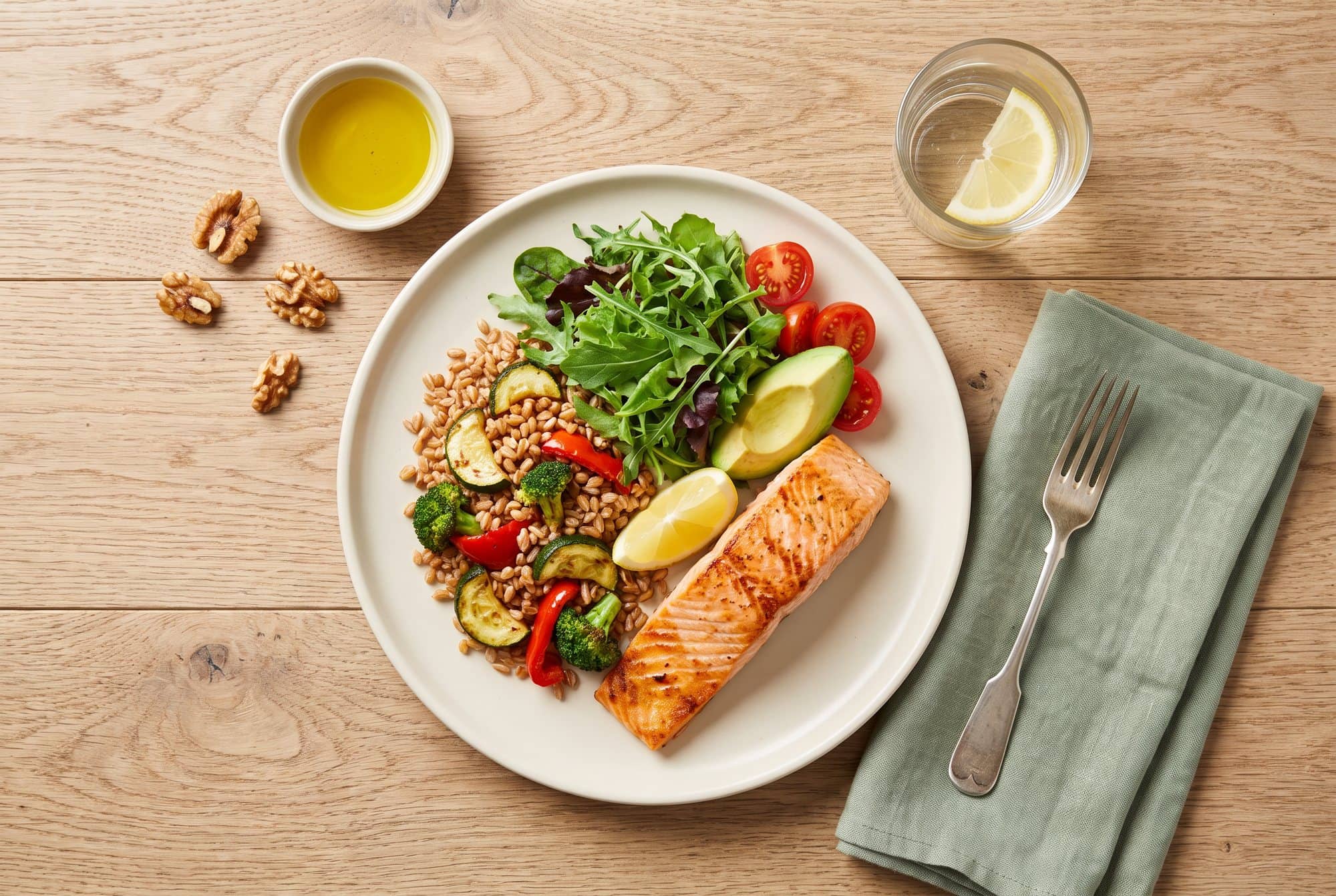
The Mediterranean-style pattern
Some of the strongest diet evidence for older adults comes from the Mediterranean pattern: vegetables, fruit, legumes, whole grains, fish, olive oil and nuts. The PREDIMED trial (opens in a new tab) in Spain assigned 7,447 adults aged 55 to 80 at high cardiovascular risk to a Mediterranean diet supplemented with extra-virgin olive oil or nuts, or to a reduced-fat control diet. Over about five years, both Mediterranean groups had fewer heart attacks, strokes and cardiovascular deaths than the control group.
Fewer packaged foods, without perfectionism
You don’t need a perfect diet. You need a better default. A few swaps go a long way:
- Plain Greek yogurt with berries instead of a flavored, sweetened cup
- A handful of nuts instead of chips
- Sparkling water with lemon instead of soda
- Leftover salmon or chicken on greens instead of a packaged frozen meal
- Oatmeal or eggs instead of a pastry
Move strong and steady: strength training and longevity
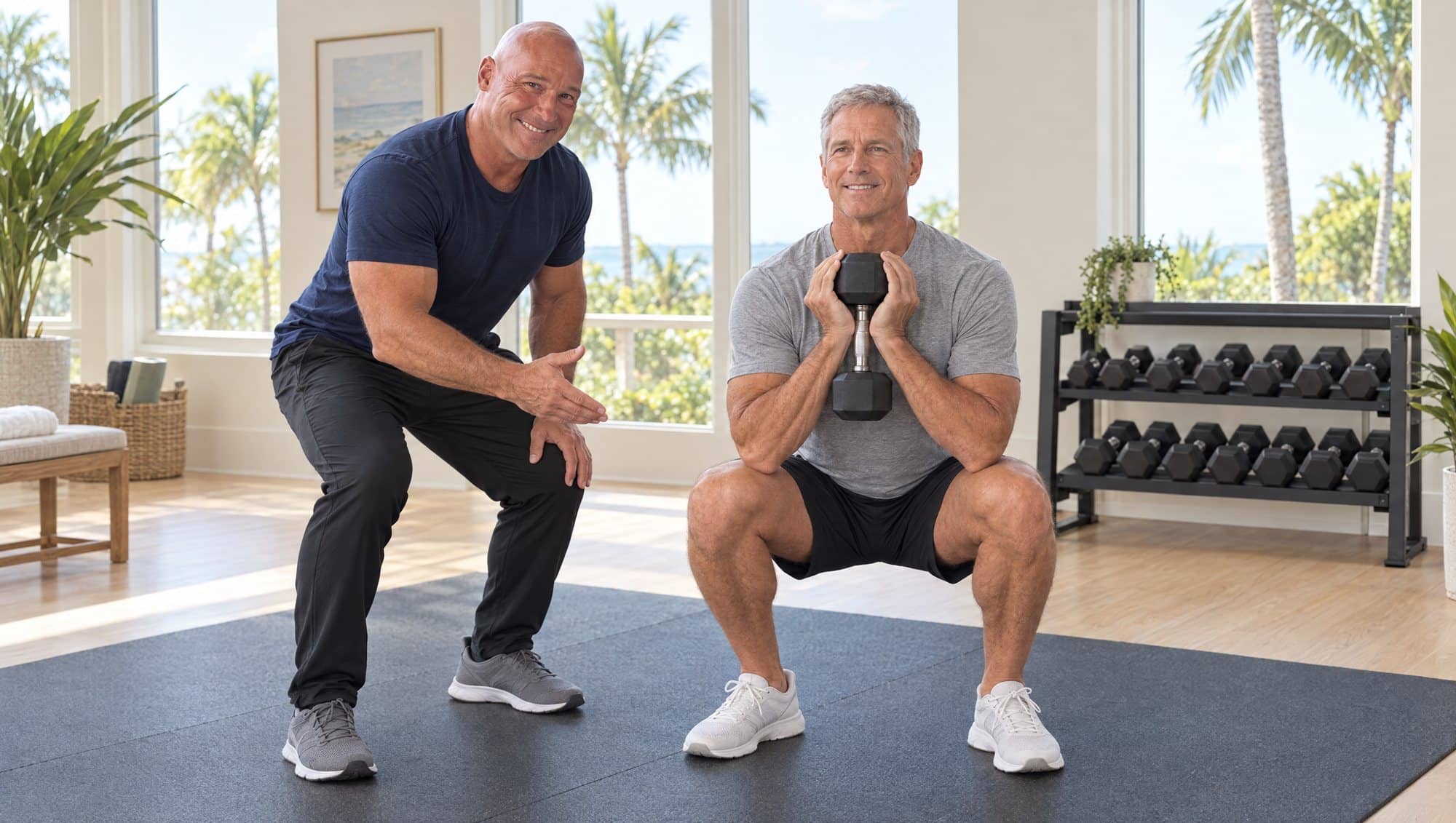
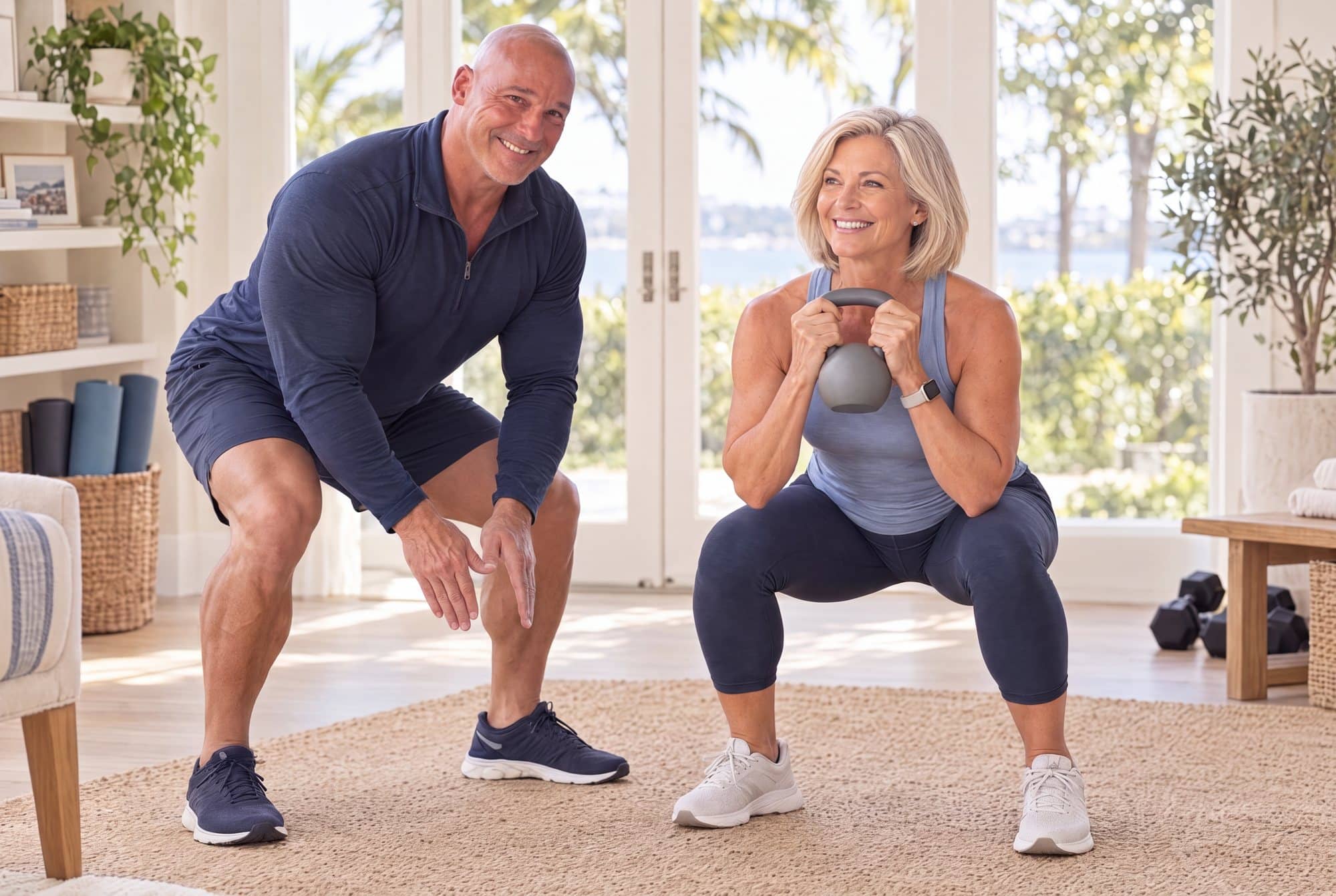
If I could hand every older adult one tool for healthy aging, it wouldn’t come from a pharmacy. It would be a pair of dumbbells, a sturdy chair and a good pair of walking shoes.
The CDC’s guidelines (opens in a new tab) for adults 65 and older call for three kinds of activity each week:
- Aerobic activity: at least 150 minutes at a moderate pace, such as 30 minutes of brisk walking five days a week
- Muscle strengthening: at least two days that work all the major muscle groups — legs, hips, back, abdomen, chest, shoulders and arms
- Balance: activities such as walking heel-to-toe or standing up from a sitting position
If those numbers feel out of reach, start smaller. The CDC is clear that some activity is better than none, and that you should be as active as your abilities and conditions allow.
Why strength matters so much
A 2022 review of 16 studies (opens in a new tab) found that muscle-strengthening activities were linked with a 10% to 17% lower risk of death from any cause, cardiovascular disease, total cancer, diabetes and lung cancer. Interestingly, the largest benefit appeared at about 30 to 60 minutes of strength work a week. You don’t need to live in the gym.
Exercise also helps prevent falls. The USPSTF recommends exercise (opens in a new tab) to prevent falls in adults 65 and older who are at increased risk. For a deeper, step-by-step plan, see my guide to strength training after 60.
A simple way to start
- Sit-to-stands: rise from a sturdy chair and sit back down with control.
- Counter push-ups: hands on the kitchen counter, body in a straight line.
- Heel raises: hold the counter, rise onto your toes and lower slowly.
- Step-ups: onto a low, stable step, holding a rail.
- Band rows: pull a resistance band toward your ribs, squeezing your shoulder blades.
- Balance practice: walk heel-to-toe along the counter, ready to steady yourself.
Begin with one or two sets of 8 to 12 easy repetitions, two days a week, and build gradually. If you have heart disease, a recent surgery, uncontrolled blood pressure or joint problems, or you’ve been inactive for a while, check with your doctor first.
Tip
Train in supportive, closed-back shoes rather than socks, slippers or bare feet. A stable base makes every exercise safer — and it’s one of the simplest ways to protect your feet. My article on feet, balance and fall prevention covers what to look for.
Rest and recover: sleep, hydration and Florida sun
Recovery is where your body adapts to everything else you do. It’s also where many people find their easiest wins, because the basics here cost almost nothing.
Sleep and aging
The National Institute on Aging (opens in a new tab) says older adults need about as much sleep as younger adults: seven to nine hours a night. What changes is the pattern. Many people go to bed and wake up earlier, sleep more lightly and wake more often during the night. Illness, pain, medicines and sleep disorders can all play a part.
Poor sleep isn’t just tiring. The NIA notes that over time, too little sleep can raise the risk of high blood pressure, heart disease and diabetes, and poor-quality sleep can increase the risk of falls and accidents.

The NIA’s sleep tips are refreshingly practical:
- Go to bed and get up at the same time every day, even on weekends.
- Build a relaxing bedtime routine, such as reading, soft music or a warm bath.
- Keep your bedroom comfortable — not too hot, not too cold.
- Exercise regularly, but not within three hours of bedtime.
- Avoid late-afternoon or evening naps, and caffeine late in the day.
- Skip alcohol, and keep the TV, computer and phone out of the bedroom.
- Avoid large meals within two to three hours of bedtime.
When to call your physician
Loud snoring with pauses in breathing, insomnia that lasts for weeks, or creepy-crawly leg sensations that keep you up deserve a medical visit. Sleep apnea and restless legs syndrome are treatable — and sometimes the treatment for restless legs does include a supplement, such as iron, chosen by your doctor. Talk with your physician before starting any sleep medicine or sleep supplement.
Hydration in Florida heat
Southwest Florida heat is not a small thing, especially as we age. The CDC explains (opens in a new tab) that adults 65 and older don’t adjust as well to sudden temperature changes, are more likely to have conditions that change how the body handles heat, and are more likely to take medicines that affect temperature control or sweating.
The CDC’s advice for hot days:
- Drink more water than usual, and don’t wait until you’re thirsty.
- If your doctor limits your fluids or you take a water pill, ask how much you should drink during hot weather.
- Stay in air conditioning as much as possible, and don’t rely on a fan as your main cooling.
- Wear loose, lightweight, light-colored clothing.
- Skip very strenuous activity in the heat, and get plenty of rest.
- Check on a friend or neighbor, and ask someone to check on you.
Seek medical care right away for signs of heat-related illness, such as muscle cramps, headache, nausea or vomiting.
Sun safety without giving up the outdoors
Time outside is good for body and mind, and in Naples it’s a big part of why we live here. The goal is smart exposure, not hiding indoors. The CDC (opens in a new tab) notes that most skin cancers are caused by too much ultraviolet (UV) light, and that in the continental U.S., UV rays are strongest from 10 a.m. to 4 p.m. during daylight saving time.
- Plan walks and outdoor workouts for early morning or evening.
- Use a broad-spectrum sunscreen with SPF 15 or higher, and reapply after two hours, swimming or sweating.
- Wear a hat with a brim all the way around and UV-blocking sunglasses.
- Choose tightly woven clothing and seek shade when you can.
- Don’t forget the tops of your feet and your toes when you wear sandals.
What about vitamin D? The ODS notes that sunscreen limits how much vitamin D your skin makes, yet health authorities still recommend SPF 15 or higher when you’re in the sun for more than a few minutes. If you’re worried about your vitamin D, that’s a question for your physician, not a reason to skip sunscreen.
Social connection: the habit nobody can sell you
Of all the healthy aging tips in this article, this one may be the most overlooked. The NIA (opens in a new tab) reports that loneliness and social isolation are associated with higher risks of high blood pressure, heart disease, depression, cognitive decline, dementia and earlier death. People who are lonely or isolated may also exercise less, sleep poorly and drink more.
Loneliness and isolation are different. Loneliness is the painful feeling of being alone. Isolation is having few people to interact with regularly. You can live alone and feel connected, or feel lonely in a crowded room.
The NIA lists risk factors that every family should know, including loss of mobility, vision or hearing problems, a lack of transportation, living alone and major life changes such as retirement or the death of a loved one. Notice how many of those are physical. When your feet hurt or you don’t trust your balance, it gets easier to stay home — and harder to stay connected.

A few ways to build connection into the week:
- Turn exercise into a standing date: a walking partner, a class or a pickleball group.
- Volunteer, join a club or take a course at a library or community center.
- Share meals. Cooking for two or four is often easier to keep healthy than eating alone.
- Get hearing and vision checked. Better hearing makes conversation easier.
- If you’re a caregiver, protect time for your own friendships.
The Eldercare Locator (opens in a new tab) connects older adults and families with local support services and is also available by phone at 1-800-677-1116.
From the ground up: your feet and healthy aging
Every fundamental in this article depends on one thing people rarely think about until it hurts: your feet. You can’t walk with friends, train your legs or stay independent if every step is painful.
The CDC lists foot pain or poor footwear (opens in a new tab) among the fall risk factors you can change, alongside lower body weakness, vitamin D deficiency, walking and balance problems, certain medicines and vision problems. More than one in four adults 65 and older falls each year, and falling once doubles the chance of falling again.
For people with diabetes, the stakes are higher. The CDC (opens in a new tab) notes that about half of all people with diabetes have some kind of nerve damage, and nerve damage can hide a cut or blister until it becomes serious. My diabetic foot care guide walks through daily checks and warning signs.
A quick foot routine for healthy aging:
- Look at your feet every day — tops, bottoms and between the toes. Use a mirror or ask for help.
- Wear supportive, well-fitting shoes, even at home. Avoid going barefoot.
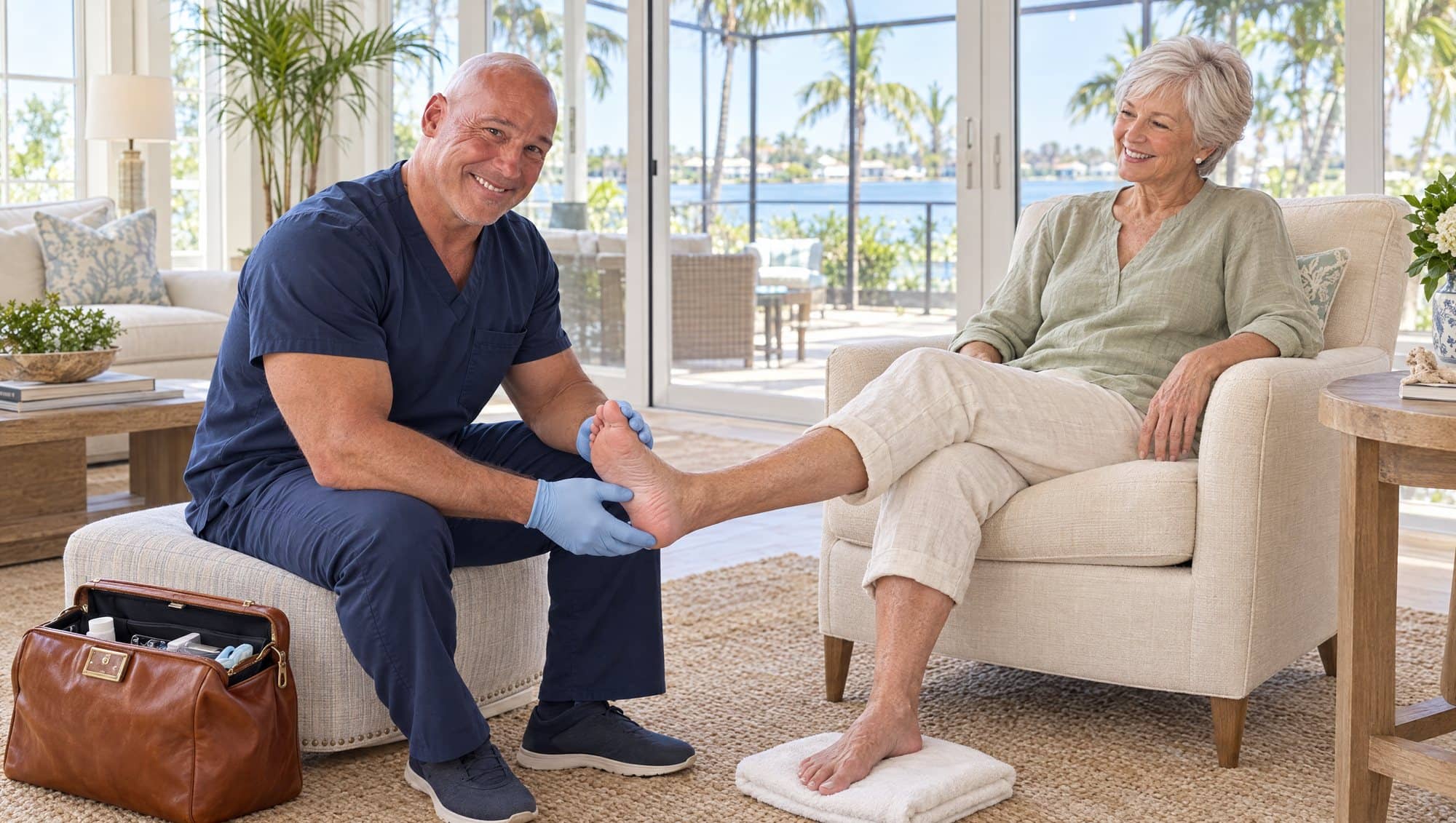
- Keep toenails trimmed straight across. If they’re thick or hard to reach, have a podiatrist trim them.
- Don’t cut corns or calluses yourself or use harsh over-the-counter removers.
- Moisturize dry heels, but not between the toes.
- Get your feet checked regularly, and right away for a sore that won’t heal, new numbness or a change in color or shape.
If thick nails or painful calluses are slowing you down, my articles on thick toenails and corns and calluses explain the options.
Good to know
Foot and ankle medical care happens in my podiatry practice, and I make house calls around Naples. I work with Medicare, Medicaid, Aetna, Cigna, Humana and UnitedHealthcare, and we check your benefits before your visit so you’ll know what’s covered and any cost ahead of time. Here’s what to expect from a house call.
Wellness consulting
Want a plan that fits your life?
One-on-one coaching on strength, balance, everyday nutrition and recovery — the fundamentals, done right. No peptides, no supplement stacks.
Putting it together: a simple week and a smarter supplement conversation
The fundamentals stick when they’re ordinary — part of a regular week rather than a 30-day challenge. Here’s one example of how they can fit together. Adjust it to your health, your schedule and your physician’s advice.
| Day | Move | Eat, rest and connect |
|---|---|---|
| Monday | 30-minute brisk walk + 20 minutes of strength | Protein at every meal; lights out on schedule |
| Tuesday | 30-minute walk + balance practice | Cook a Mediterranean-style dinner for two |
| Wednesday | 30-minute walk + 20 minutes of strength | Refill the water bottle before every outing |
| Thursday | Gentle stretching or a swim | Coffee or lunch with a friend |
| Friday | 30-minute walk + balance practice | Fish or beans for dinner; daily foot check |
| Saturday | 30-minute walk with a friend or group | Market morning: fresh produce for the week |
| Sunday | Rest, or an easy stroll | Plan the week’s meals; get to bed on time |
That’s 150 minutes of walking, two strength days and regular balance practice — the CDC’s recommendations for older adults — built around ordinary life.
Red flags in supplement and peptide marketing
As the NIA puts it, if something sounds too good to be true, it probably is. Be cautious when a product:
- Promises to reverse aging, melt fat or treat a disease
- Leans on testimonials and before-and-after photos instead of published studies
- Calls itself “natural” as if that proves it’s safe
- Comes as a multi-product stack, subscription or bundle
- Is sold “for research use only” or “not for human consumption”
- Discourages you from telling your doctor or from taking prescribed medicine
Where my wellness coaching fits
My wellness coaching is education and coaching on healthy-living habits — not medical care, and not a replacement for your physician. My medical practice is limited to the foot and leg, and your physician stays in charge of your medical care, including any supplement or medication decisions.
What I bring is practical, everyday support built on the same five fundamentals in this article: a clear look at your numbers, real food, strength and balance, rest and recovery, and feet that carry you comfortably. There are no supplements, peptides or products to buy. Results vary with consistency, and I don’t promise specific outcomes. You can read more about my background — I’ve been practicing since 2002 — or get in touch to start the conversation.
Healthy aging isn’t about finding the right bottle. It’s about doing the simple things well, for a long time, with good people around you.
This article is general information, not medical advice. Talk with your physician before starting, stopping or changing any medicine or supplement, and seek care right away for any new or worrying symptom. In an emergency, call 911.
Common questions
Not automatically. The National Institute on Aging says eating a variety of healthy foods is the way to get the nutrients you need, and that doctors may recommend a supplement when diet falls short. Common examples are vitamin B12, vitamin D and calcium, depending on your diet, health and test results.
For preventing heart disease or cancer, the evidence isn’t there. The USPSTF found it insufficient in 2022, and a 2024 study of about 390,000 U.S. adults found that daily multivitamin users didn’t live longer. A multivitamin can still make sense if your appetite or diet is limited, or if your physician recommends one.
The wellness peptides sold for anti-aging, such as BPC-157 and TB-500, are not FDA-approved drugs, and good human safety data are limited. FDA rules on compounding them have been changing, but a compounding rule isn’t approval. Products sold online as “research use only” aren’t made for people.
The 2025–2030 Dietary Guidelines set a target of 1.2 to 1.6 grams per kilogram of body weight per day — roughly 80 to 110 grams for a 150-pound adult. The PROT-AGE study group recommends at least 1.0 to 1.2 g/kg for healthy adults over 65. If you have kidney disease, your physician should set your target.
Ask your physician. The USPSTF found insufficient evidence to screen adults without symptoms, and the Endocrine Society suggests against routine testing for most people. Testing makes more sense with symptoms, osteoporosis, a condition that affects absorption or other specific risks.
About the same as younger adults: seven to nine hours a night, according to the National Institute on Aging. Sleep tends to get lighter with age, so a regular schedule and a calm bedtime routine help. Talk with your doctor before starting any sleep medicine or supplement.
The CDC advises older adults to drink more water than usual on hot days and not to wait until they’re thirsty. If your doctor limits your fluids or you take a water pill, ask how much is right for you in hot weather.
No. His wellness coaching is education on real food, strength and balance, rest and foot health, with nothing to sell. Your physician stays in charge of your medical care, including any decisions about supplements or medicines.
Don’t see your question? Call (914) 844-8024 — a real person will help.
Sources
The health, safety and coverage facts in this article are based on these sources.
- U.S. Preventive Services Task Force — Vitamin, Mineral, and Multivitamin Supplementation to Prevent Cardiovascular Disease and Cancer (2022)uspreventiveservicestaskforce.org(opens in a new tab)
- National Institute on Aging — Dietary Supplements for Older Adultsnia.nih.gov(opens in a new tab)
- NIH Office of Dietary Supplements — Vitamin D: Fact Sheet for Consumersods.od.nih.gov(opens in a new tab)
- NIH Office of Dietary Supplements — Vitamin B12: Fact Sheet for Consumersods.od.nih.gov(opens in a new tab)
- FDA — Certain Bulk Drug Substances for Use in Compounding That May Present Significant Safety Risksfda.gov(opens in a new tab)
- USDA & HHS — Dietary Guidelines for Americans, 2025–2030 (RealFood.gov)realfood.gov(opens in a new tab)
- CDC — Older Adult Activity: An Overviewcdc.gov(opens in a new tab)
- National Institute on Aging — Sleep and Older Adultsnia.nih.gov(opens in a new tab)
- Demay MB et al. Vitamin D for the Prevention of Disease: An Endocrine Society Clinical Practice Guideline. J Clin Endocrinol Metab, 2024pubmed.ncbi.nlm.nih.gov(opens in a new tab)
- Loftfield E et al. Multivitamin Use and Mortality Risk in 3 Prospective US Cohorts. JAMA Network Open, 2024pubmed.ncbi.nlm.nih.gov(opens in a new tab)
About the author
Robert Losier, DPM
Doctor of Podiatric Medicine · Practicing since 2002
Dr. Robert Losier is a Florida-licensed podiatric physician who brings unhurried foot care to patients’ homes across Naples and Southwest Florida, and on-site podiatry to care communities. A graduate of the New York College of Podiatric Medicine, he lives what he teaches — daily movement, strength training and real food — and shares practical healthy-living guidance as part of foot care.
This article is general information, not medical advice. It isn’t a substitute for an exam or for advice from your own doctor or podiatrist about your situation. Please don’t start, stop or change any medication or treatment without talking to the clinician who prescribed it. If you notice a new wound, signs of infection, or a sudden change in the color, temperature or feeling of your foot — especially if you have diabetes — contact your doctor promptly. In an emergency, call 911.