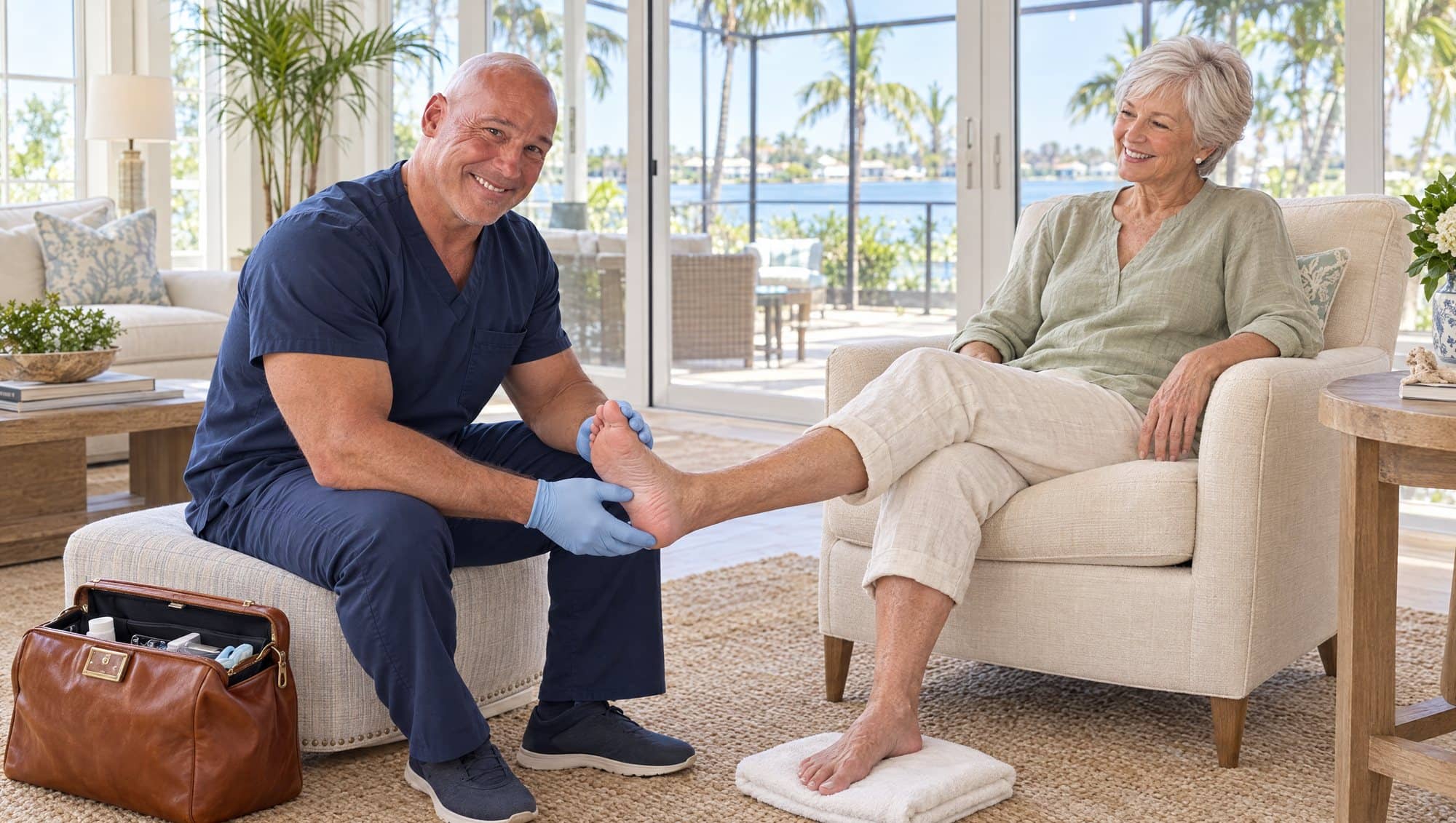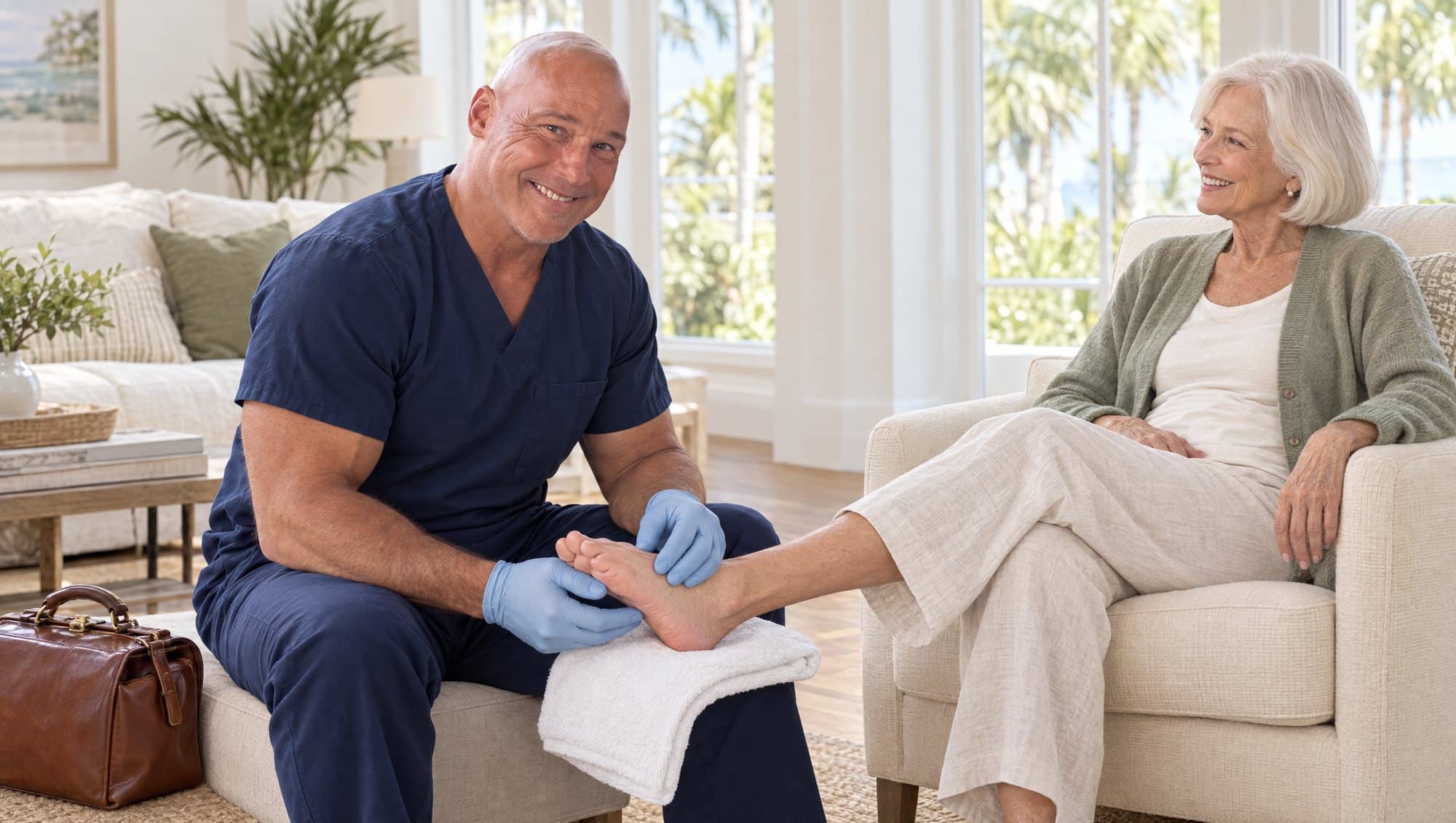
A corn can be smaller than a pencil eraser and still make a favorite pair of shoes feel impossible. A thick callus under the ball of the foot can turn an easy walk into something you quietly start avoiding. For something so small, they can take a real bite out of daily life.
The good news is that corns and calluses treatment is usually simple and gentle once you understand why the thick skin formed in the first place. The less-good news is that some of the most popular quick fixes, like razor blades, acid pads and aggressive filing, are exactly the ones that cause trouble, especially for older adults and anyone with diabetes.
When I look at corns and calluses during house calls around Naples, I go in the same order every time: the skin, then the shoe, then the foot underneath. This guide follows that same path, in plain English, so you know what's safe to do at home and when it's time to hand things over to a podiatrist.
Corns and calluses are thick skin that builds up where pressure or friction keeps repeating. Safe treatment takes the pressure off with roomier shoes and cushioning pads, then softens skin with warm soaks, gentle pumice filing and daily moisturizer. Never cut them or use acid pads. With diabetes, poor circulation or fragile skin, let a podiatrist treat them.
Key takeaways
- Corns and calluses are thick skin that builds up where pressure or friction repeats. Take away the cause and they usually settle down.
- Safe home care is gentle: a 5 to 10 minute warm soak, a few light passes with a wet pumice stone, and moisturizer every day.
- Never cut or shave a corn yourself, and skip medicated (acid) corn pads if you have diabetes, poor circulation or fragile skin.
- Shoes with a roomy toe box, a low heel and a soft upper, plus non-medicated pads, take pressure off sore spots.
- Thinner padding under the feet and drier, thinner skin make corns and calluses more troublesome after 60.
- Bleeding, drainage, spreading redness or an open sore, or any problem spot if you have diabetes, means it's time to call a podiatrist.
In this article· 14 sections
- 1Corns vs. calluses: what's the difference?
- 2Why corns and calluses form: pressure, friction and your foot's shape
- 3Why corns and calluses change after 60
- 4Corns and calluses treatment at home: a safe, step-by-step routine
- 5What not to do: razors, acid pads and other risky fixes
- 6Padding, footwear and prevention: taking the pressure off for good
- 7Naples feet: sandals, flip-flops, sand and humidity
- 8What a podiatrist does for corns and calluses
- 9Diabetes, poor circulation and calluses: why the rules are different
- 10A caregiver's guide to corns and calluses
- 11How house calls make corn and callus care easier
- 12When is a corn or callus urgent?
- 13Common questions
- 14Sources
Corns vs. calluses: what's the difference?
Corns and calluses are both your skin protecting itself. When the same spot is pressed or rubbed again and again, the outer layer of skin adds extra layers, a bit like a built-in shoe pad. Doctors call this hyperkeratosis, which simply means "extra hard skin."
The difference is mostly about shape and depth. The American Podiatric Medical Association (APMA) puts it simply: flat, spread-out thickening is a callus, while a thicker, deeper spot is a corn. Where it sits on the foot matters less than how it's built.
What a callus looks and feels like
A callus is a broad, flattish patch of tough, rough-feeling skin. It usually forms on the bottom of the foot, under the ball of the foot, on the heel or along the side of the big toe, wherever your weight and your shoe press over a wide area.
Calluses are often less sensitive than the skin around them, so many people don't notice one at first. Trouble starts when a callus gets very thick. It can feel like walking on a hard pad, ache by the end of the day, or crack, which opens the door to infection.
What a corn looks and feels like
A corn is smaller, rounder and more sharply defined than a callus. Many corns have a hard central core. When a shoe presses on the corn, that core presses on the sensitive tissue beneath it, which is why something so tiny can hurt so much.
Corns usually form on the tops and sides of the toes, where a toe rubs the inside of a shoe, or between toes that squeeze against each other.
Hard corns, soft corns and seed corns
Podiatrists sort corns into three everyday types:
- Hard corns are dense and dry. They most often sit on top of the smaller toes over the knuckles, or on the outer side of the little toe, which are classic spots where a toe meets the shoe.
- Soft corns form between the toes, most often between the fourth and fifth toes. They look whitish or gray and feel rubbery, because the moisture between the toes keeps them soft. Don't let the name fool you: soft corns can be very painful.
- Seed corns are tiny corns on the bottom of the foot.
Here's a side-by-side look at how the two compare.
| Corn | Callus | |
|---|---|---|
| Size and shape | Small, round and well defined | Larger, flatter and irregular |
| Usual location | Tops and sides of toes; between toes (soft corns) | Soles: ball of the foot, heel, side of the big toe |
| Depth | Deeper, often with a hard central core | Spread out, fairly even thickness |
| How it feels | Tender when pressed, like a pebble in your shoe | Often painless at first; can get sore or crack when thick |
| Typical cause | A toe rubbing on a shoe, or toes rubbing each other | Weight and friction spread over a wider area |
| Safe first steps | Roomier shoes, a non-medicated doughnut pad or toe sleeve | Cushioned insoles, warm soak, gentle pumice, moisturizer |
Corn, callus or wart?
Plantar warts, which are warts on the sole of the foot, can look a lot like corns and calluses. They're a different problem that needs different treatment, so it's worth knowing the difference.
A review in American Family Physician describes two clues doctors use. A corn tends to hurt most when you press straight down on it, while a wart is often more tender when you squeeze it from the sides. And when a wart is trimmed, tiny dark dots and pinpoint bleeding usually appear, which a corn or callus doesn't show.
If you can't tell what you're looking at, don't treat it at home. Let a podiatrist take a look first.
Why corns and calluses form: pressure, friction and your foot's shape
Here's the simplest way to picture it. The skin on your feet sits between two hard surfaces: your bones on the inside, and your shoe or the floor on the outside. Wherever a bony spot meets steady pressure, the skin in between gets squeezed.
Common pressure points include the knuckles on the tops of the toes, the ends of the long foot bones under the ball of the foot, and the edges of the heel. Your skin responds by thickening, which helps for a while.
The catch is that it becomes a cycle. As the American Family Physician review explains, the extra skin raises the pressure in that spot, and the added pressure builds even more thick skin. That's why corns and calluses rarely disappear on their own unless something about the pressure changes.
Shoes that cause corns
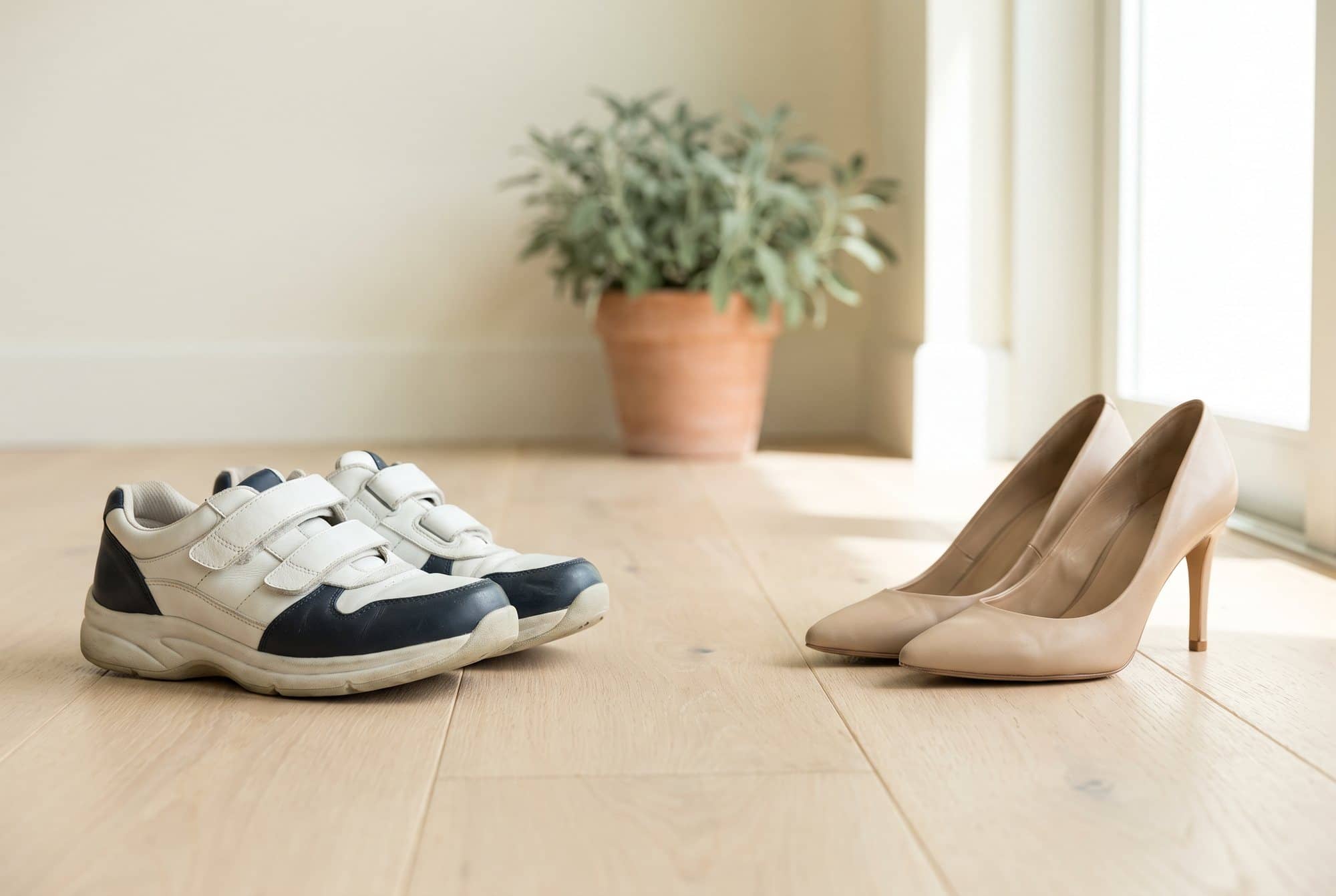
Shoes are the most common culprit. Cleveland Clinic names poorly fitting shoes as the main cause of corns and calluses. These are the usual suspects:
- Narrow or pointed toe boxes that squeeze toes together or press on the toe knuckles.
- High heels, which push your weight forward onto the ball of the foot. The APMA notes that this extra pressure can cause calluses there.
- Shoes that are too loose, which let your foot slide and rub with every step.
- Inside seams, stitching or worn linings that rub the same spot all day.
- Shoes worn without socks, which adds friction. Both the NHS and Cleveland Clinic list this as a cause.
Hammertoes, bunions and other changes in foot shape
Sometimes the shoe is only half the story. When a toe bends at its middle joint, which is called a hammertoe, the knuckle rises and rubs against the top of the shoe. The tip of the toe can also press down into the sole. Both spots are natural places for corns. The APMA notes that people with hammertoes are prone to corns and calluses.
Bunions (a bony bump at the base of the big toe), arthritis and bone spurs create similar pressure points, according to Cleveland Clinic. These changes don't mean you're stuck with corns forever. They do mean your shoes and padding have to work a little harder, and that a podiatrist's help is often worth it.
Calluses under the ball of the foot
The ball of the foot takes a lot of load every time you push off to take a step. Calluses there usually form under the rounded ends of the long bones that lead to the toes, called the metatarsal heads. The American Family Physician review describes this area as the usual home of calluses.
High heels, thin-soled shoes and the loss of natural padding under the foot all add pressure here. Some people get a deep, very focused callus under one of those bones that keeps coming back. That kind usually needs a podiatrist's help with trimming, padding or an orthotic, which is a shoe insert shaped to move pressure away from the sore spot.
Everyday habits that add friction
A few other habits quietly feed corns and calluses:
- Walking barefoot, whether at home, on the lanai or at the beach. Cleveland Clinic lists going barefoot as a cause.
- Long hours of standing or walking, especially on hard floors.
- Toenails that are too long. The American Academy of Dermatology (AAD) notes that long toenails can push the toes up against the shoe, which leads to corns over time.
- The way you walk. If your foot rolls or lands unevenly, certain spots take extra load with every step.
Why corns and calluses change after 60
Corns and calluses can happen at any age, but the feet we have at 75 aren't the feet we had at 35. A few normal changes make thick skin both more likely and more troublesome.
Thinner cushioning under the feet
The fat pads on the soles work like built-in shock absorbers. The NHS lists losing fat on the bottom of the feet as you get older among the causes of corns and calluses. With less natural padding, the bones under the ball of the foot and the heel press harder on the skin, and the skin answers by thickening.
It's one reason the ground can feel harder underfoot than it used to. Cushioned shoes and insoles help make up the difference.
Thinner, drier, less stretchy skin
The National Institute on Aging (NIA) explains that with age, the outer layer of skin gets thinner and less elastic, and older adults may produce less of the natural oil that keeps skin supple.
That combination matters for corns and calluses in two ways. Dry, thick skin is more likely to crack, especially around the heels. And thin skin is easier to injure with a blade, a rough file or a strong chemical, which is why gentle care matters so much.
Feet that are harder to see and reach
Bending down to reach your feet, seeing small details on the bottom of your foot, and having the hand strength to file evenly can all get harder over the years. That's not a failing. It's simply a good reason to recruit help from a family member, a caregiver or a podiatrist instead of struggling on your own.
Health conditions that change the rules
Diabetes, nerve damage in the feet (neuropathy), poor circulation and a weakened immune system all raise the stakes.
- Diabetes. The American Diabetes Association (ADA) notes that calluses occur more often and build up faster on the feet of people with diabetes.
- Neuropathy. Nerve damage can dull your ability to feel pain, so a corn rubbing raw, or a home treatment going wrong, may not hurt the way it should.
- Poor circulation. Reduced blood flow slows healing, so a small cut or burn can linger.
Good to know
The NHS advises that people with diabetes, circulation problems or a weakened immune system, and older people in general, shouldn't try to treat corns and calluses themselves. My own approach is similar. Gentle care like moisturizing and better shoes is fine for most people, but removing thick skin belongs with a podiatrist whenever your health or your skin leaves less room for error.
Corns and calluses treatment at home: a safe, step-by-step routine
Good home care has two goals: take the pressure off, and soften the thick skin gently over time. It isn't about getting rid of a corn in one evening. Slow and steady is the safe way to do it.
Before you start: is home care right for you?
Skip home removal, and call a podiatrist instead, if any of these apply to you:
- You have diabetes.
- You have numbness, tingling or burning in your feet, which can be signs of neuropathy.
- You have poor circulation, such as a diagnosis of peripheral artery disease or sores on your feet or legs that are slow to heal.
- You have a weakened immune system.
- Your skin is thin and tears or bruises easily.
- You can't comfortably see or reach the bottoms of your feet.
- The spot is red, warm, bleeding, draining or open.
- You're not sure it's a corn or a callus.
Even if one of these fits you, roomier shoes, cushioning and a daily moisturizer are generally still fine. Just leave the filing and trimming to your podiatrist.
Step 1: Take the pressure off
This step matters more than any cream or file. If the shoe that caused the corn goes right back on, the corn comes right back too.
Switch to shoes with more room in the toes and a lower heel, wear socks, and add a non-medicated cushion around or over the sore spot. You'll find more on choosing pads and shoes further down.
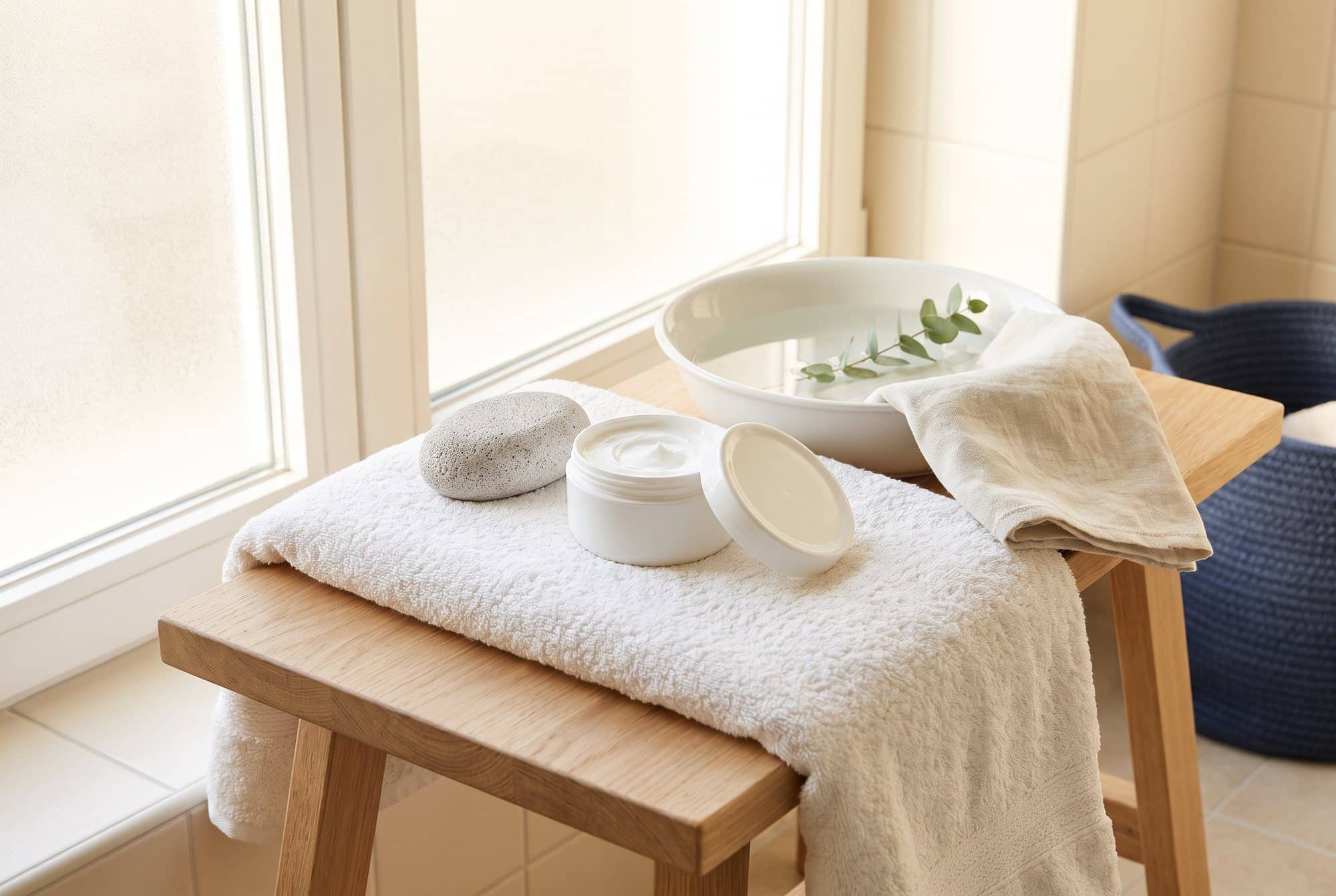
Step 2: Soak in warm, not hot, water
The AAD recommends soaking the area in warm water for about five to 10 minutes, until the skin softens. Test the water with your elbow or a thermometer before your feet go in.
If your feet are less sensitive than they used to be, they can't be trusted to judge temperature. The ADA warns that people with diabetes can easily burn their feet with hot water.
A few safety habits make the soak safer:
- Sit down for the whole soak, with the basin on a towel on the floor.
- Use a non-slip mat, and dry your feet completely before you stand up.
- Skip bath oils. The NIA cautions that bath oil makes tubs slippery and raises the risk of falling, and oily feet on a tile floor are no different.
Step 3: File gently with a pumice stone
Wet a pumice stone or a fine foot file and rub the thickened skin with light circular or sideways strokes, as the AAD suggests. A few passes are enough. The AAD also warns against taking off too much skin, which can cause bleeding and infection.
Stop well before the skin looks pink or feels tender. The goal is to remove a thin layer each time, not to reach "normal" skin in one session.
- Use pumice on calluses and hard corns only, not on soft corns between the toes, where the skin is delicate.
- Rinse the stone afterward and let it dry. Keep it for your own use.
- If you have diabetes and your podiatrist has said it's okay, the ADA notes that using a pumice stone on wet skin every day, followed by lotion, helps keep calluses under control.
Step 4: Dry carefully, especially between the toes
Pat your feet dry with a soft towel, including between each toe. Moisture trapped between the toes keeps the skin soft and soggy, which is exactly the setup for soft corns.
Step 5: Moisturize every day
Rub a thick, unscented cream into the tops and bottoms of your feet once or twice a day, but not between the toes. The AAD notes that moisturizers containing urea or ammonium lactate help soften hard corns and calluses gradually.
The AAD also lists salicylic acid moisturizers. If you have diabetes, neuropathy or poor circulation, skip salicylic acid in any form unless your podiatrist recommends it. Wipe extra cream off your soles before walking on hard floors.
Step 6: Cushion and protect
Cushioning keeps the pressure off while the skin softens:
- A non-medicated, doughnut-shaped pad around a corn, which the AAD recommends.
- Moleskin around a callus.
- Silicone toe sleeves or toe separators for corns on top of or between the toes.
Check the skin under any pad every day. Go easy on strong adhesives if your skin is thin, because peeling them off can tear fragile skin.
Step 7: Give it time, and know when to stop
Repeat the routine a few times a week. Corns and calluses soften slowly, over weeks rather than days.
The NHS recommends seeing a doctor if a corn or callus hasn't improved after three weeks of treating it yourself, or sooner if it bleeds, drains or becomes very painful. Stop the soaking and filing straight away if the area turns red, raw or sore.
Your at-home corn and callus routine
- Wear roomier shoes and socks, not the pair that caused the problem
- Soak for 5 to 10 minutes in warm water you've tested first
- Make a few light passes with a wet pumice stone and stop before it's tender
- Dry well, including between the toes
- Moisturize the tops and soles, not between the toes
- Put a fresh non-medicated pad in place
- Look at the skin under the pad every day
What not to do: razors, acid pads and other risky fixes
Some of the most common home remedies for corns and calluses are also the ones most likely to backfire. Here's what to leave alone.
Don't cut or shave corns and calluses yourself
It's tempting to "just take the top off" with a razor blade, a pair of nail clippers or a callus shaver. Please don't.
The ADA warns that cutting corns and calluses yourself can lead to ulcers and infection, and the NHS gives the same advice to everyone. With diabetes or poor circulation, a cut that seems small can heal slowly and turn into something serious.
Are medicated corn pads safe?
"Medicated" corn pads, plasters and liquid corn removers contain salicylic acid, a chemical that breaks down thick skin. The problem is that it can't tell the difference between the corn and the healthy skin around it.
The American Family Physician review advises avoiding over-the-counter salicylic acid products because they may damage surrounding normal tissue, especially in people with nerve damage or a weakened immune system. The APMA warns that harsh chemicals in some of these products can lead to burns or even foot ulcers. The ADA puts it plainly: these products can burn your skin.
The package tells part of the story, too. Under federal labeling rules, these products must warn people with diabetes or poor blood circulation not to use them, and must say not to use them on irritated, reddened or infected skin. Even for healthy adults, the directions limit use to a period of up to 14 days.
So, are medicated corn pads safe? For many older adults, especially anyone with diabetes, poor circulation, numbness or thin skin, my answer is no. Choose the plain, non-medicated version instead. Read the box carefully, because medicated and non-medicated pads often sit side by side on the same shelf and look almost identical.
Tip
Before you buy any corn or callus product, look for the words "medicated" or "salicylic acid" on the package. If you see either one and you have diabetes, circulation problems or fragile skin, put it back and choose a non-medicated cushion instead.
Other quick fixes to skip
- Heating pads and very hot soaks. The ADA cautions that people with diabetes can burn their feet easily, and the same goes for anyone with reduced feeling.
- Aggressive filing. Electric callus removers and metal graters can take off more skin than you intend. If you use any filing tool, use light pressure and stop early.
- Going barefoot to "let it breathe." Walking barefoot is one of the causes of corns and calluses in the first place.
- "Bathroom surgery" of any kind. If the job needs a blade, a chemical or more than a few light passes, it's a job for a podiatrist.
When to call a podiatrist
If a home treatment left you with bleeding, a raw spot, a blister or new redness, stop and call. Keep the area clean, keep pressure off it, and don't apply any more acid or filing until it's been checked.

House calls in Naples
Rather have Dr. Losier take a look?
He comes to your home with sterile instruments and everything needed for the visit. We’ll check your benefits before your visit, so you’ll know what’s covered (and any cost) ahead of time.
Padding, footwear and prevention: taking the pressure off for good
The American Family Physician review lists padding and footwear changes alongside careful trimming as the first line of care. These changes do more than ease today's soreness. They're what keep a corn or callus from coming right back.
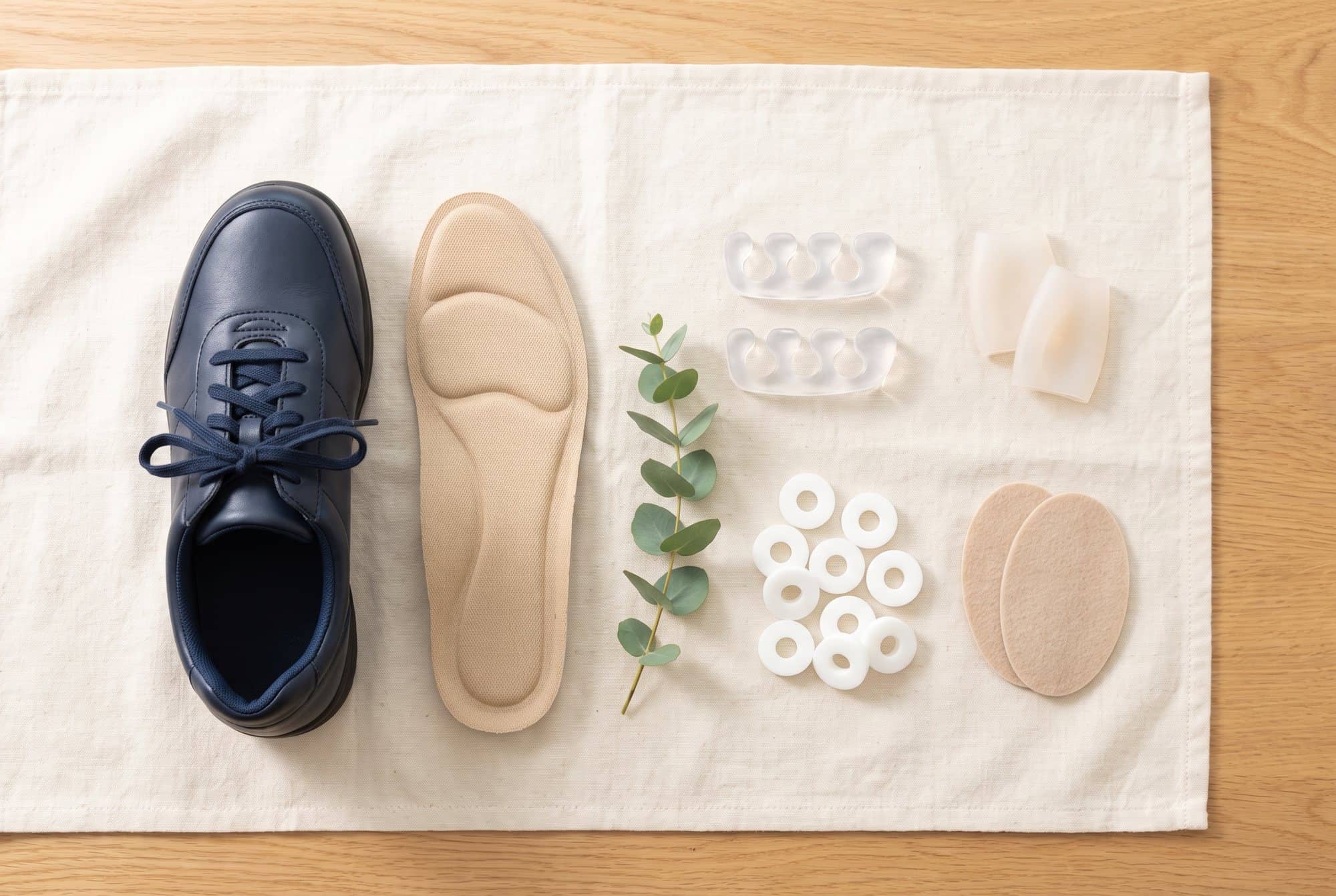
Pads, sleeves and toe separators
Each type of cushion has its own job:
- Doughnut pads ring the corn so pressure lands on the healthy skin around it instead of on the corn itself.
- Moleskin is a thin, soft fabric with an adhesive back that cuts friction over a callus.
- Silicone or gel toe sleeves slip over a toe like a tiny sock, which helps with hard corns on the tops of the toes.
- Toe separators, also called spacers, sit between the toes and keep them from pressing together. They're especially helpful for soft corns.
- Gel pads and inserts can help too. The APMA notes that gel pad inserts may decrease friction points and pressure.
Choose the right size, choose non-medicated, and take pads off at night so you can check the skin underneath.
Cushioned insoles and custom orthotics
The NHS recommends soft insoles or heel pads to ease pressure. A good cushioned insole spreads your weight over a wider area, which takes some of the load off the bony spots where calluses form.
When a callus keeps returning in the same place, especially under the ball of the foot, a podiatrist can make custom pads or recommend an orthotic. An orthotic is a shoe insert shaped to your foot that shifts pressure away from the sore spot.
How to choose shoes that won't cause corns
The American Family Physician review recommends low-heeled shoes with a soft upper and a roomy toe box. The NHS adds wide, well-fitting shoes with low heels and thick, cushioned socks, and it advises against high heels and tight, pointy shoes.
The AAD suggests shopping for shoes when your feet tend to be a little swollen, which for most people means later in the day, and having your feet measured. Its nail-care advice also recommends alternating which pair of shoes you wear each day.
The shoe-fit check
- You can wiggle all of your toes
- There's a little space beyond your longest toe
- The upper is soft, with no seams pressing on your toe knuckles
- The heel is low and wide
- Laces or straps keep your foot from sliding forward
- The sole is cushioned, not paper-thin
- You tried them on later in the day, with the socks you'll actually wear
If you're not sure whether a shoe is helping or hurting, bring it to your next podiatry visit. The inside of a shoe often shows exactly where the rubbing happens.
A simple prevention checklist
Cleveland Clinic notes that corns and calluses can return if the underlying cause is still there. Prevention is mostly about steady, everyday habits:
- Wear shoes with a roomy toe box, a low heel and a cushioned sole
- Always wear socks with closed shoes
- Keep toenails trimmed so they don't push your toes up into your shoes
- Moisturize the tops and soles of your feet daily
- Use non-medicated pads or sleeves on spots that tend to rub
- Look at your feet every day, or have someone look for you
- Rotate your shoes so each pair gets a day to dry out
- Ask about insoles or orthotics if calluses keep returning under the ball of the foot
- Keep regular podiatry visits if you have diabetes, poor circulation or recurring calluses
Staying active matters, too. Comfortable feet make it easier to keep walking, and regular movement and strength work are part of staying steady on your feet. If sore feet have been keeping you on the couch, our guides to strength training after 60 and foot health and fall prevention are good next reads. For one-on-one coaching on strength, balance and everyday healthy habits, see our wellness page.
Naples feet: sandals, flip-flops, sand and humidity
Life in Naples and the rest of Southwest Florida happens in open shoes. Sandals at lunch, flip-flops to the pool, bare feet on the lanai and the beach are all part of the fun. They can also be part of the corn and callus story.
Flip-flops and flat sandals
Thin, flat flip-flops offer very little cushioning under the ball of the foot or the heel. The toe post and straps can also rub the same spot for hours. If you love sandals, look for:
- A strap behind the heel, so your foot doesn't slide.
- A cushioned, contoured footbed instead of a flat, thin one.
- Adjustable straps with a soft lining where they touch your skin.
- A sole thick enough that you don't feel every crack in the sidewalk.
Save the flimsiest flip-flops for short trips across a pool deck.
Bare feet on lanais, pool decks and sand
Walking barefoot is one of the causes of corns and calluses that Cleveland Clinic lists. Hard pool decks, lanai pavers and tile floors give your feet no cushioning at all. A supportive house shoe or a cushioned sandal with a back strap is kinder to your skin, and a non-slip sole gives you better footing on wet surfaces.
Sand is gentle on the feet for a stroll along the water, but sand that gets inside your shoes adds grit and friction. Shake shoes out after the beach, and rinse and dry your feet before putting socks back on.
Humidity and damp toes
Our humid climate means toes can stay damp for hours after a swim, a shower or a long walk. Moisture between the toes is what keeps soft corns soft. Dry carefully between each toe, change damp socks, and give your shoes a day to dry out between wears.
Tip
If you split your time between Naples and a colder place, take a fresh look at your shoes each time you switch seasons. Shoes that fit fine with bare feet in Florida can feel tight with thicker socks up north, and the other way around.
What a podiatrist does for corns and calluses
If home care isn't working, or isn't safe for you, a podiatrist can help in ways a pumice stone can't. Here's what professional corns and calluses treatment usually involves.
Finding the cause
Treatment starts with understanding why the thick skin keeps forming. The APMA notes that a podiatrist's evaluation may include an exam, a look at how you walk, and sometimes X-rays.
When I visit patients at home, I also look closely at the shoes they actually wear every day, not the ones saved for special occasions. I check whether the problem might be a wart or something else that needs a different plan.
Careful trimming (debridement)
This is the step most people mean when they talk about corn or callus removal. Using a sterile blade, the podiatrist shaves away the thickened skin a thin layer at a time. Debridement is the medical word for this careful trimming.
The APMA explains that the procedure is painless because the skin being removed is already dead. Taking away that hard, pressing layer is also why walking can feel easier afterward.
Padding, orthotics and shoe advice
Trimming without changing the pressure is only a short-term fix. A podiatrist can add custom padding, suggest an insole or orthotic, and help you sort out which of your shoes are helping and which are hurting.
When surgery is considered
Surgery for corns and calluses isn't common. The American Family Physician review advises that it be considered only after conservative care has failed. Cleveland Clinic notes it may come up when a structural problem such as a hammertoe or a bony bump keeps causing pain, limits how you get around, or leads to repeated infections.
How often should corns and calluses be treated?
It depends on how fast the skin builds back up and how much the pressure has changed. Some people need one or two visits plus better shoes. Others, especially those with foot-shape changes or diabetes, do well with regular maintenance visits. Your podiatrist will suggest a schedule that fits your feet.
Diabetes, poor circulation and calluses: why the rules are different
If you have diabetes, a corn or callus isn't just a comfort problem. It's a skin-protection problem.
The ADA explains that calluses occur more often and build up faster on the feet of people with diabetes, and that if they aren't trimmed, they can get very thick, break down and turn into ulcers, which are open sores. Nerve damage can mean you don't feel a corn rubbing, and poor circulation slows healing once the skin does break.
The ADA's advice on corns and calluses is clear:
- Never cut corns or calluses yourself. Let a health care professional on your diabetes care team trim them.
- Don't use chemical corn or callus removers. They can burn your skin.
- Do use a pumice stone gently on wet skin, and follow with lotion, if your care team agrees.
Alongside that, check your feet every day, including the bottoms and between the toes. A hand mirror or a family member can help with the spots that are hard to see.
Professional care matters here. Medicare Part B can cover foot exams or treatment every six months for people with diabetic nerve damage and loss of protective sensation, and that care may include treatment for calluses, according to Medicare.gov. For the whole picture, see our diabetic foot care guide and our plain-English answer to does Medicare cover podiatry.
When to call a podiatrist
If you have diabetes and notice a corn or callus that looks darker than usual, has blood under it, blisters, cracks, drains or leaves a stain on your sock, call promptly. These are signs the skin may be breaking down, and early care matters.
A caregiver's guide to corns and calluses
If you help a parent or spouse with their feet, you're often the first person who can spot a problem. A few simple habits make a big difference.
How to check feet
- Choose good light, and use a hand mirror for the soles if your loved one is checking their own feet.
- Look at the tops of the toes, between each toe, the ball of the foot and the heels.
- Note anything new: a thick spot, a color change, a crack, a blister, redness or drainage.
- Watch how they walk. Limping, shuffling or avoiding certain shoes can be a sign that something hurts.
Someone with memory loss or nerve damage may not tell you their foot hurts. A change in how they walk, or a refusal to wear a particular shoe, may be the only clue.
Helping with a soak safely
- Test the water yourself with your elbow or a thermometer. Warm, never hot.
- Keep your loved one seated, with a towel and a non-slip mat under the basin.
- Keep soaks to about five to 10 minutes, then dry well, especially between the toes.
- Leave out bath oil and fragranced soaks.
Only use a pumice stone if their podiatrist has okayed it, and never on broken skin or soft corns between the toes.
Checking shoes
Slide your hand inside their shoes and feel for rough seams, worn-through linings or anything that has fallen inside. Look at how the soles wear. Shoes that are stretched, collapsed or worn thin usually need replacing, and pairs that leave red marks need rethinking.
Caregiver note
You don't need to fix a corn yourself to help. Watch for changes, keep shoes in good shape and make the call when something looks off. You're welcome to book a visit for your parent. Family members are welcome to be there, and with your parent's permission we'll keep you updated.
If your loved one lives in an assisted-living or memory-care community, regular foot checks can be built into their care. Our article on podiatry services for nursing homes and assisted living explains how on-site rounds work, and community leaders can learn more on our facilities page.
How house calls make corn and callus care easier
For many older adults, the hardest part of corn and callus care isn't the treatment. It's getting to the appointment, especially when walking hurts.
When I make a house call, the visit happens in your own chair, in good light, with your own shoes right there to look at. I bring sterile instruments and everything needed for the visit, so trimming, padding and shoe advice can all happen in one unhurried appointment. Family members are welcome to join, ask questions and learn what to watch for.
A typical corn and callus visit includes:
- A review of your health history and medications.
- A look at your skin, nails, circulation and sensation.
- Careful trimming of corns and calluses with sterile instruments.
- Padding or cushioning where it will help.
- A look at your everyday shoes, with practical advice.
- A simple plan for home care and follow-up, explained in plain language.
You can read more about how house calls work, or what to expect step by step in our guide to house-call podiatry.
On insurance: I work with Medicare, Medicaid, Aetna, Cigna, Humana and UnitedHealthcare, with more plans being added. Coverage depends on your plan and the reason for your care, so we'll check your benefits before your visit, and you'll know what's covered (and any cost) ahead of time. You can see the details in our insurance section.
I've been practicing podiatry since 2002, and I make house calls across Naples and nearby communities, including Pelican Bay, Port Royal, Park Shore, Vanderbilt Beach, Marco Island, Bonita Springs and Estero. You can learn more about me here.
House calls in Naples
Rather have Dr. Losier take a look?
He comes to your home with sterile instruments and everything needed for the visit. We’ll check your benefits before your visit, so you’ll know what’s covered (and any cost) ahead of time.
When is a corn or callus urgent?
Most corns and calluses are a nuisance, not an emergency. A few signs, though, mean it's time to stop home care and get help. The NHS advises seeing a doctor if a corn or callus bleeds or has discharge, and Cleveland Clinic lists signs of infection and intense pain as reasons to contact a provider.
Use this table as a quick guide:
| What you notice | What it may mean | What to do |
|---|---|---|
| A small, dry, mildly tender spot, and you're otherwise healthy | Thick skin from pressure | Home care: ease the pressure, soak, file gently, moisturize |
| Pain that changes how you walk, or no better after 3 weeks | The cause is still there, or it isn't a simple corn | Book a podiatry visit |
| You have diabetes, numbness, poor circulation or fragile skin | Higher risk of skin breakdown and slow healing | Let a podiatrist treat it instead of treating it yourself |
| Bleeding, a blister, a crack, dark color or an open sore | The skin may be breaking down | Call your podiatrist promptly and keep pressure off it |
| Spreading redness, warmth, swelling, pus or drainage | Possible infection | Get same-day care |
| Fever or chills with a red, swollen foot | A spreading infection | Seek urgent care today, or call 911 in an emergency |
When to call a podiatrist
Call right away for any open sore on the foot if you have diabetes. The ADA advises that every foot ulcer be seen by a doctor right away, because neglected ulcers can lead to infection and even loss of a limb.
The bottom line
Corns and calluses are your skin's way of protecting itself from pressure. The safest, most lasting treatment is to change the pressure: better shoes, the right cushioning and, when needed, an orthotic. Gentle soaking, light pumice filing and daily moisturizer help soften what's already there.
Skip the razors and the acid pads, especially after 60 or if you have diabetes, poor circulation or fragile skin. And when a corn or callus bleeds, drains, cracks, looks infected or simply won't settle down, let a podiatrist take care of it. That's what we're here for, and we're happy to come to you.
This article is general information, not medical advice. Please talk with your podiatrist or physician about your own feet and health, and never stop or change a medication without your doctor's guidance.
Common questions
Both are thickened skin caused by pressure or friction. A callus is a broad, flat patch, usually on the sole or heel. A corn is smaller and deeper, often with a hard center, and forms on the tops or sides of toes or between them.
They can be risky. Medicated pads and liquid removers contain salicylic acid, which can damage the healthy skin around a corn, and their labels warn people with diabetes or poor circulation not to use them. For most older adults, plain non-medicated cushioning pads are the safer choice.
Please don't. Cutting or shaving thick skin at home can cause bleeding, open sores and infection, which is a serious risk with diabetes or poor circulation. A podiatrist can trim it safely with sterile instruments, and it usually doesn't hurt because the thickened skin is dead tissue.
Take the pressure off first with well-fitting shoes and cushioned insoles. Then soak in warm water for 5 to 10 minutes, file gently with a wet pumice stone and moisturize every day. If you have diabetes, numbness or poor circulation, ask a podiatrist before you file.
Those are soft corns. They form where neighboring toes press against each other, most often between the fourth and fifth toes, and they stay soft because they absorb moisture. Roomier shoes, toe separators and keeping the area dry help, and a podiatrist can trim them safely.
Sometimes, once the pressure that caused them stops, for example after you switch to roomier shoes. If the cause stays, they usually come back. A corn or callus that hasn't improved after about three weeks of careful home care is worth having checked.
See a podiatrist if a corn or callus is painful, bleeds, drains or looks red, if it isn't improving with home care, or if you're not sure what it is. If you have diabetes, poor circulation or numbness in your feet, let a podiatrist treat any corn or callus instead of doing it yourself.
Medicare generally treats cutting or removing corns and calluses as routine foot care, which it doesn't cover. There are exceptions, for example people with diabetes-related nerve damage and loss of protective sensation, for whom Part B can cover foot exams and treatment, including care for calluses. We check your benefits before your visit.
Don’t see your question? Call (914) 844-8024 — a real person will help.
Sources
The health, safety and coverage facts in this article are based on these sources.
- American Academy of Dermatology — How to treat corns and callusesaad.org(opens in a new tab)
- American Podiatric Medical Association — Corns and callusesapma.org(opens in a new tab)
- Cleveland Clinic — Corns and calluses: symptoms, causes and treatmentsmy.clevelandclinic.org(opens in a new tab)
- American Family Physician — Corns and calluses resulting from mechanical hyperkeratosis (Freeman, 2002)aafp.org(opens in a new tab)
- NHS — Corns and callusesnhs.uk(opens in a new tab)
- American Diabetes Association — Foot complicationsdiabetes.org(opens in a new tab)
- FDA labeling rule for corn and callus removers — 21 CFR 358.550 (Cornell Law School LII)law.cornell.edu(opens in a new tab)
- National Institute on Aging — Skin care and agingnia.nih.gov(opens in a new tab)
- Medicare.gov — Foot caremedicare.gov(opens in a new tab)
- Medicare.gov — Foot care (for diabetes)medicare.gov(opens in a new tab)
About the author
Robert Losier, DPM
Doctor of Podiatric Medicine · Practicing since 2002
Dr. Robert Losier is a Florida-licensed podiatric physician who brings unhurried foot care to patients’ homes across Naples and Southwest Florida, and on-site podiatry to care communities. A graduate of the New York College of Podiatric Medicine, he lives what he teaches — daily movement, strength training and real food — and shares practical healthy-living guidance as part of foot care.
This article is general information, not medical advice. It isn’t a substitute for an exam or for advice from your own doctor or podiatrist about your situation. Please don’t start, stop or change any medication or treatment without talking to the clinician who prescribed it. If you notice a new wound, signs of infection, or a sudden change in the color, temperature or feeling of your foot — especially if you have diabetes — contact your doctor promptly. In an emergency, call 911.